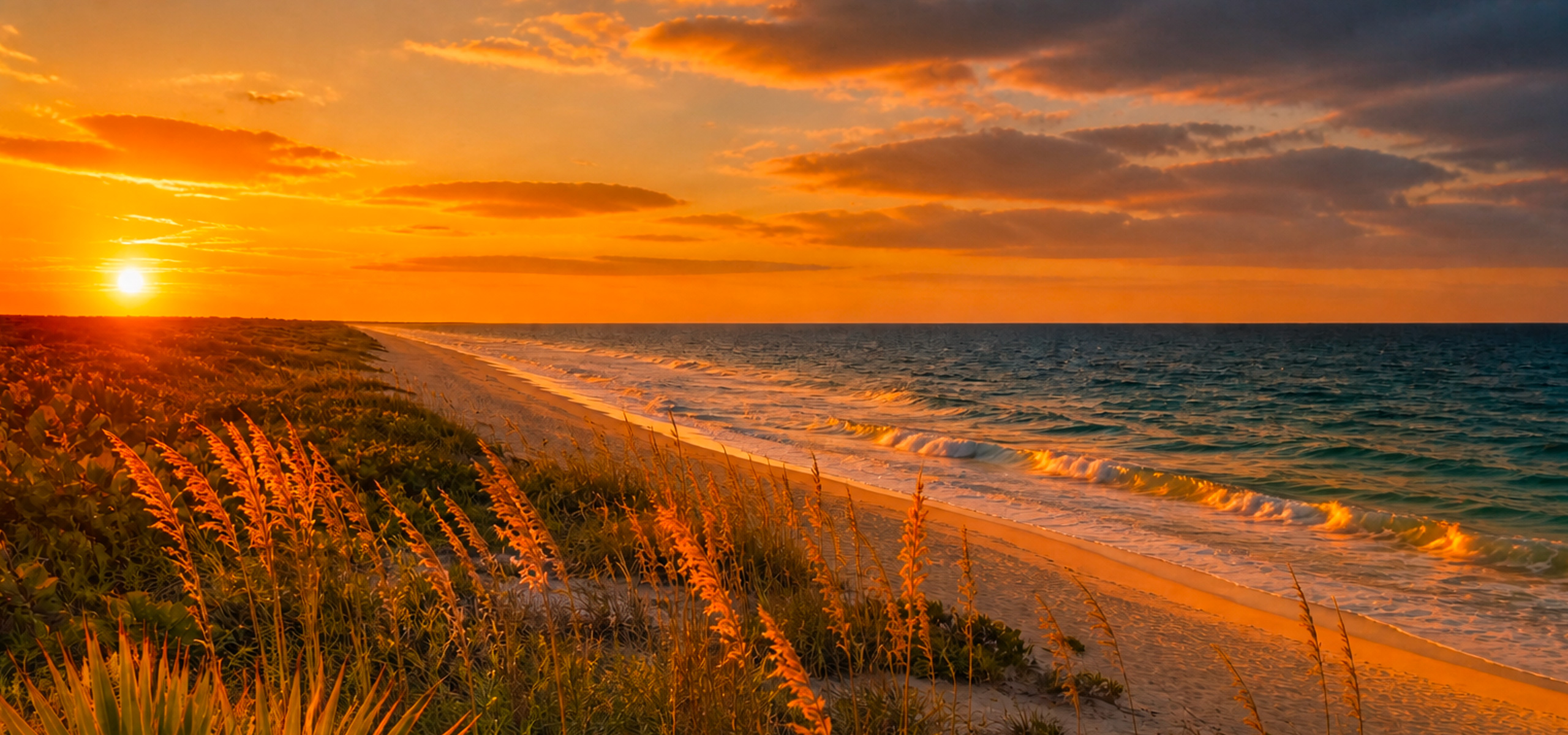

Insights FullBleed Amber 1

Narrow-Band Amber from HK Lighting

Choosing the Right Spectrum Is Only the Beginning

Wildlife-sensitive lighting requires more than an amber-colored source. Spectrum, output, shielding, distribution, and placement all determine whether an installation meets applicable requirements.

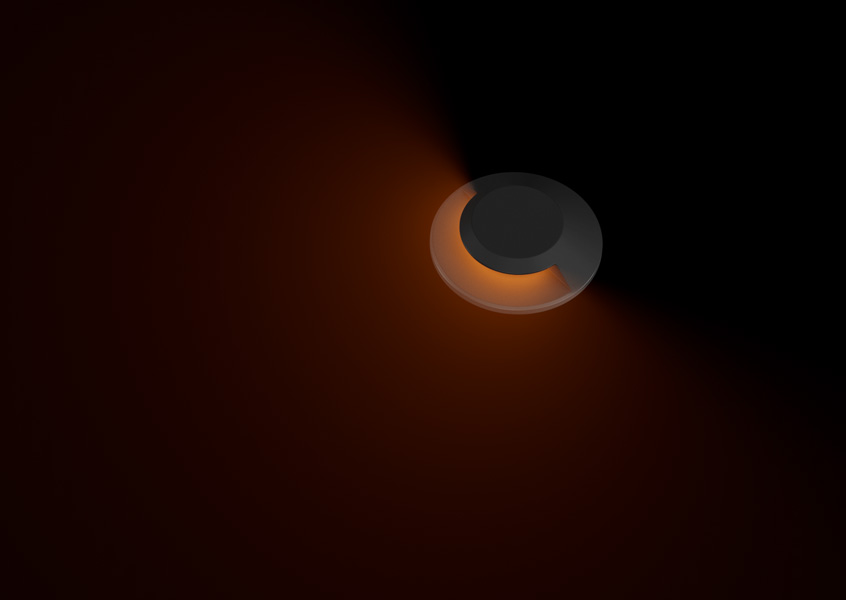
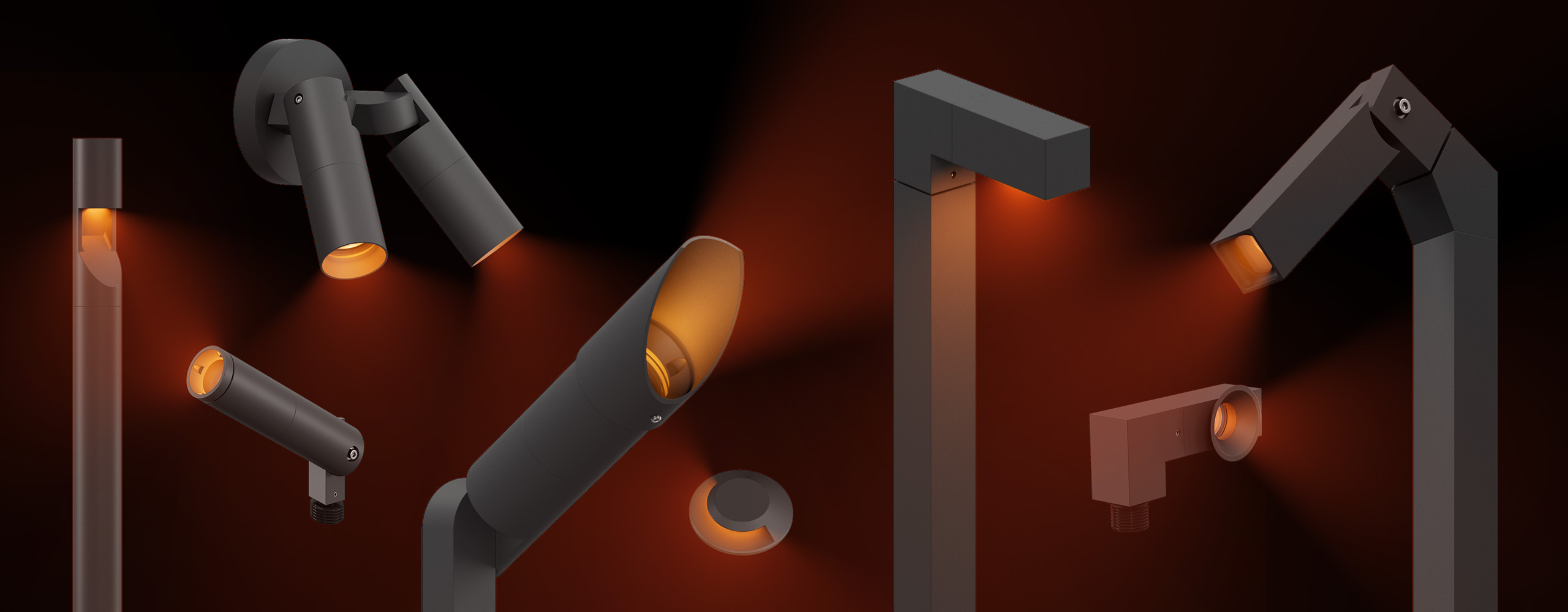
HK Lighting combines direct-emission Narrow-band Amber LEDs with precise optical control, limited wattages, durable outdoor construction, and architectural fixture design. Together, these attributes give project teams a complete lighting solution designed to support wildlife-lighting compliance and applicable certification criteria when properly specified and installed.

Insights SectionDividers Amber 1b

Designed for the Night

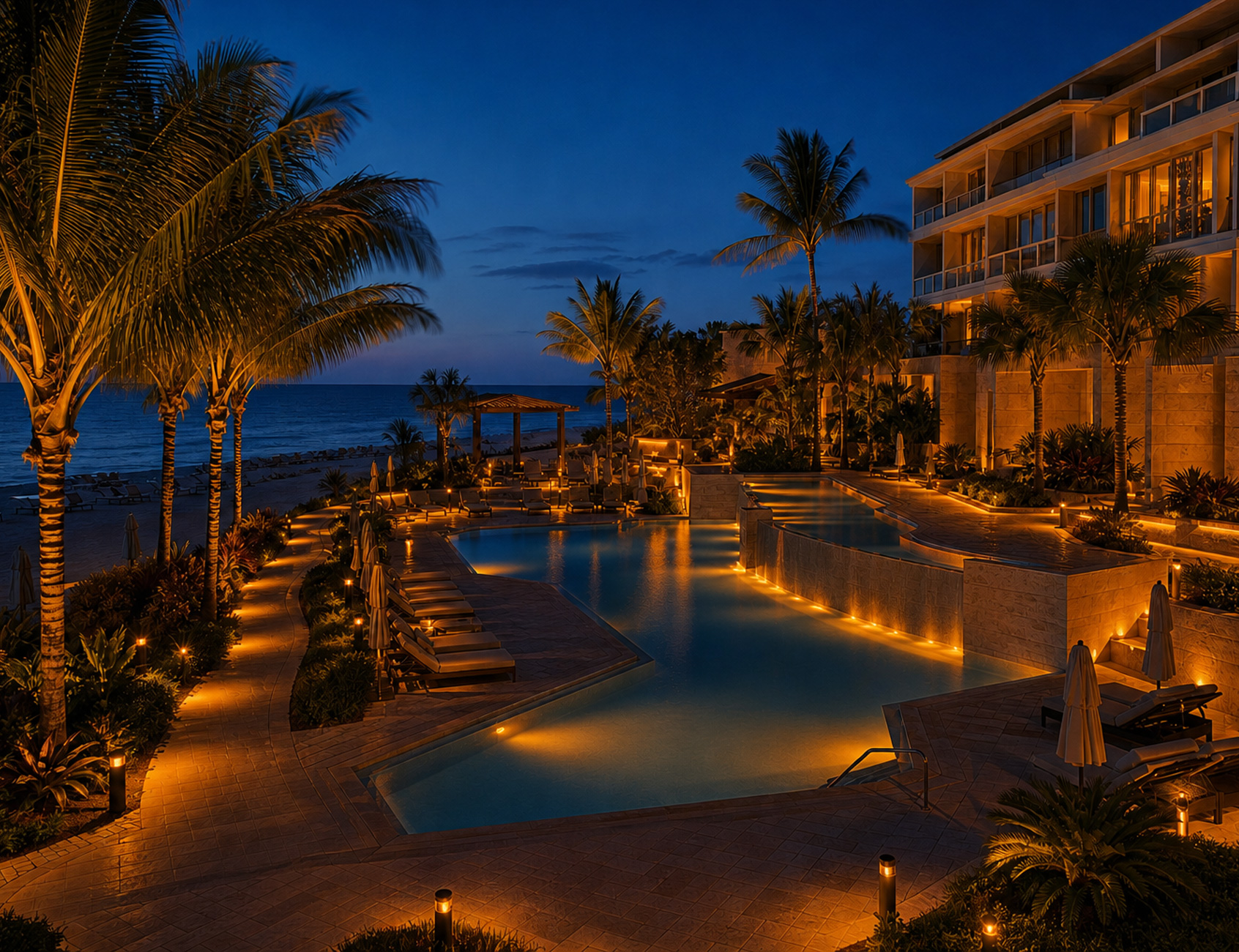
Quality outdoor lighting helps people understand and navigate a site without making night look like day. Light the path, step, entrance, or feature, then allow the surrounding darkness to remain.

In wildlife-sensitive areas, light beyond the task unnecessarily expands the illuminated footprint. Excess output, broad distributions, uplight, glare, and shorter wavelengths can increase wildlife exposure and disrupt natural nighttime conditions.

Wildlife Safe Narrow-Band Amber
3000K lighting
3000K HK Lighting Narrow-Band Amber

What Light Is Actually Needed?

If there is no defined need, do not add light. When illumination is required for navigation or safety, use the lowest useful level and keep it within the intended area. This helps prevent artificial light from extending unnecessarily into adjacent habitat.

Darkness Is Habitat

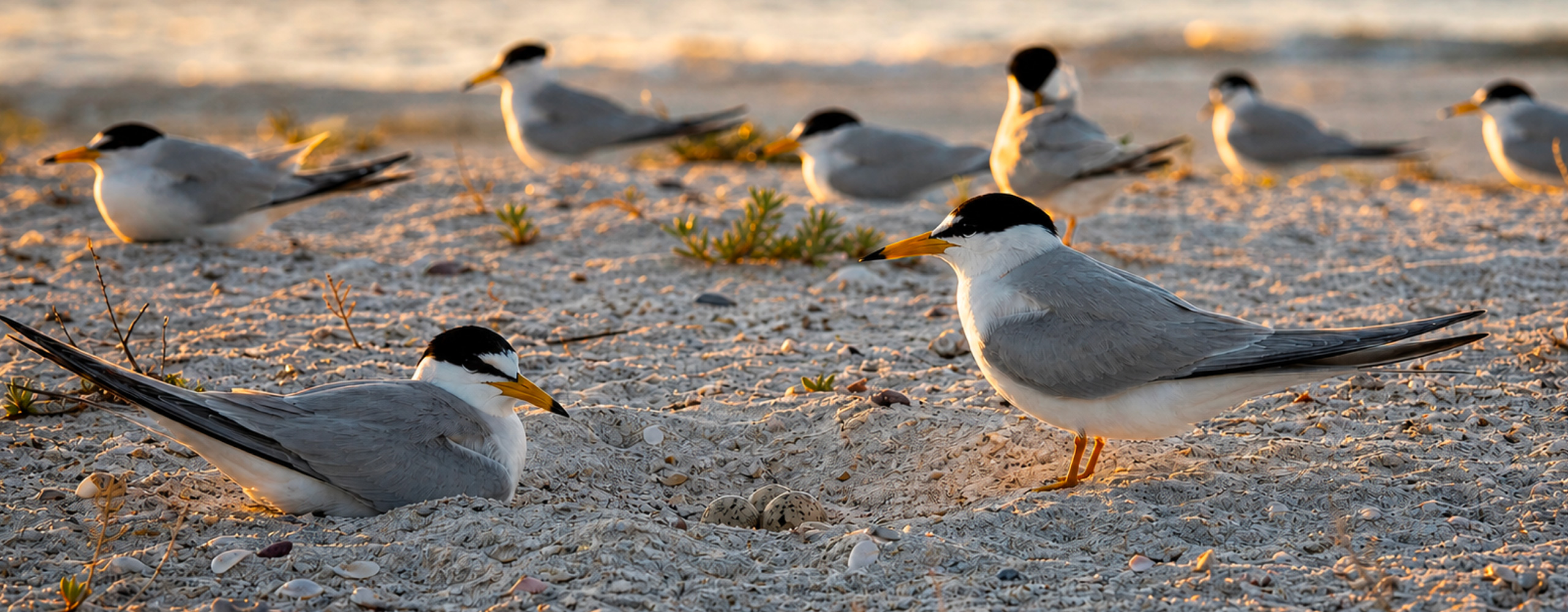
Darkness is part of the ecosystem. Many animals rely on natural patterns of light and darkness to orient, migrate, feed, reproduce, and avoid predators. Artificial light can interrupt those patterns.

Insights InPage Amber Products Turtles

Sea turtles:  Hatchlings instinctively move toward the brightest visible horizon. On a natural beach, this guides them toward the ocean. Artificial light can draw them off course, and illuminated beaches may deter nesting adults.

Migrating birds:  Artificial light at night can attract and disorient migrating birds, alter their flight paths, and increase collision risk.

Insects and nocturnal wildlife:  Nighttime lighting can change activity, feeding, and movement throughout the surrounding habitat.

Different species respond to light differently. The lighting response remains consistent: select appropriate wavelengths and limit the intensity, distribution, and duration of artificial light.

FWC Wildlife Lighting Criteria

The Florida Fish and Wildlife Conservation Commission identifies three criteria for wildlife lighting. A fixture or lamp must meet all three to satisfy FWC Wildlife Lighting Criteria: low mounting, long-wavelength light, and a shielded light source.

Insights InPage Amber Wide SM 3c

1)  Low Mounting

Mount fixtures as low as practical and use the lowest output that completes the task. Lower mounting places light closer to the intended surface. Lower output limits the illuminated footprint, glare, reflected light, and visibility from surrounding habitat.

Insights InPage Amber Wide SM 4

2)  Long-Wavelength Light

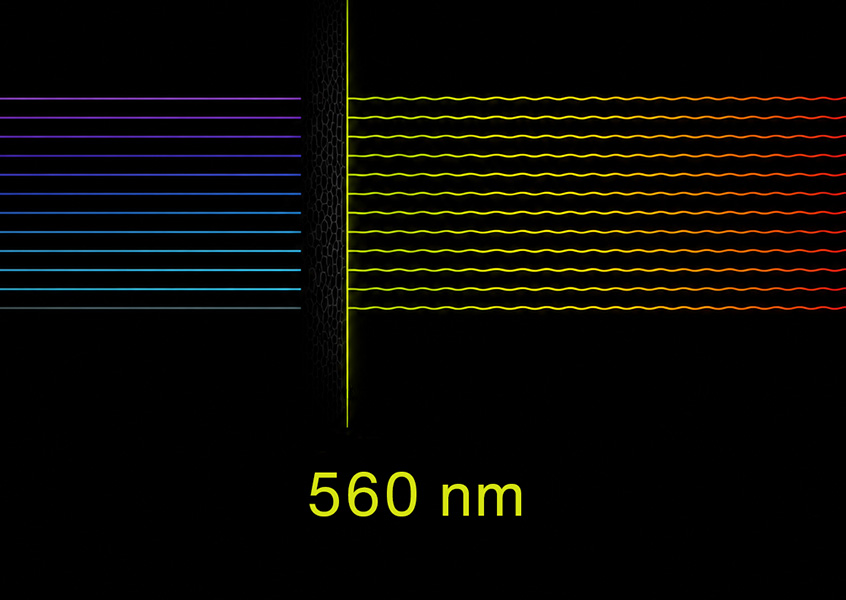
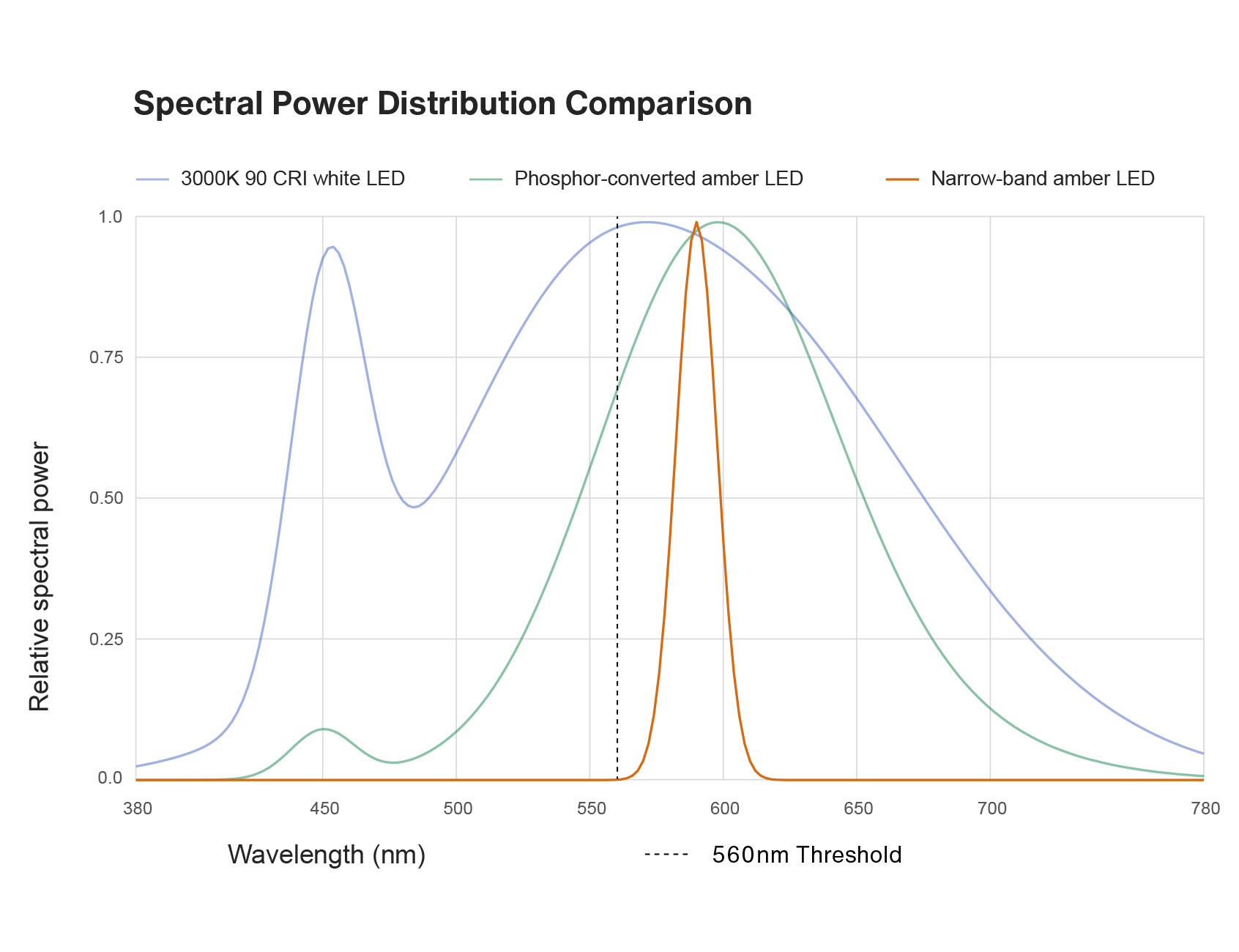
FWC requires light greater than 560 nanometers with no wavelengths below 560 nanometers. Direct-emission amber, orange, and red LEDs can qualify when spectral data confirms their output. Warm white is not an equivalent substitute. Even a source that appears very warm contains shorter wavelengths.

Insights InPage Amber Wide SM 5b

3)  Shielded Light Source

Direct light downward and prevent the lamp or glowing lens from being visible from the protected area.

FWC requires the fixture to meet or exceed full cutoff, defined as no light emitted above a 90-degree plane. Fixture design, shielding, mounting position, and aiming all affect the result. 

Certification and Project Approval

All three criteria must work together. A qualifying amber source can still fail the application if it is too bright, mounted too high, aimed toward habitat, or directly visible.

FWC certification applies to specific fixture or lamp models and approved configurations. It does not certify the complete installation or replace review under applicable local requirements.

FWC currently lists its certification program as closed to new submissions while the agency updates its review process. Products certified through earlier review cycles remain listed, and project approval remains subject to the requirements and review process of the governing jurisdiction.

HK Lighting Narrow-band Amber products combine the long-wavelength source, controlled output, precise optics, shielding, and directional capability needed to address these criteria. When properly specified and installed, they give project teams a complete HK Lighting solution for meeting applicable wildlife-lighting requirements.

Not Every Amber LED Is the Same

An amber appearance does not confirm spectral performance. Two LEDs can look similar while emitting very different wavelengths.

Insights InPage Amber Wide SM 1

Phosphor-Converted Amber

Phosphor-converted amber uses a phosphor to shift the output of a shorter-wavelength LED toward warmer-colored light. The result is a broader spectral distribution that can include wavelengths below 560 nanometers. Current FWC criteria exclude phosphor-converted amber sources, commonly identified as PC Amber.

Insights InPage Amber Wide SM 2

Direct-Emission Narrow-Band Amber LED

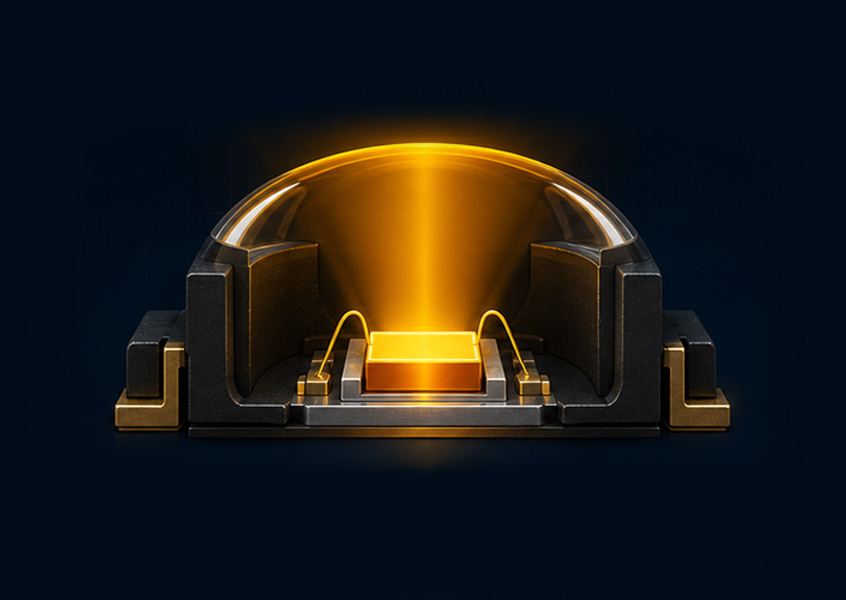
HK Lighting uses direct-emission Narrow-band Amber LEDs in its wildlife-sensitive product configurations. These LEDs produce amber light at the semiconductor. They do not use a phosphor, filter, colored lens, or gel to make another light source appear amber.

The output is concentrated within a narrow portion of the visible spectrum. This concentration produces the saturated orange appearance associated with Narrow-band Amber LED technology.

A direct-emission label alone does not establish FWC compliance. Spectral data for the exact source and product configuration must demonstrate output greater than 560 nanometers with no spectral output below that threshold.

3000K white LED and HK Lighting Narrow-band Amber LED comparison
Specify by measured spectral performance, not perceived color.

The LED Source Alone Is Not Enough

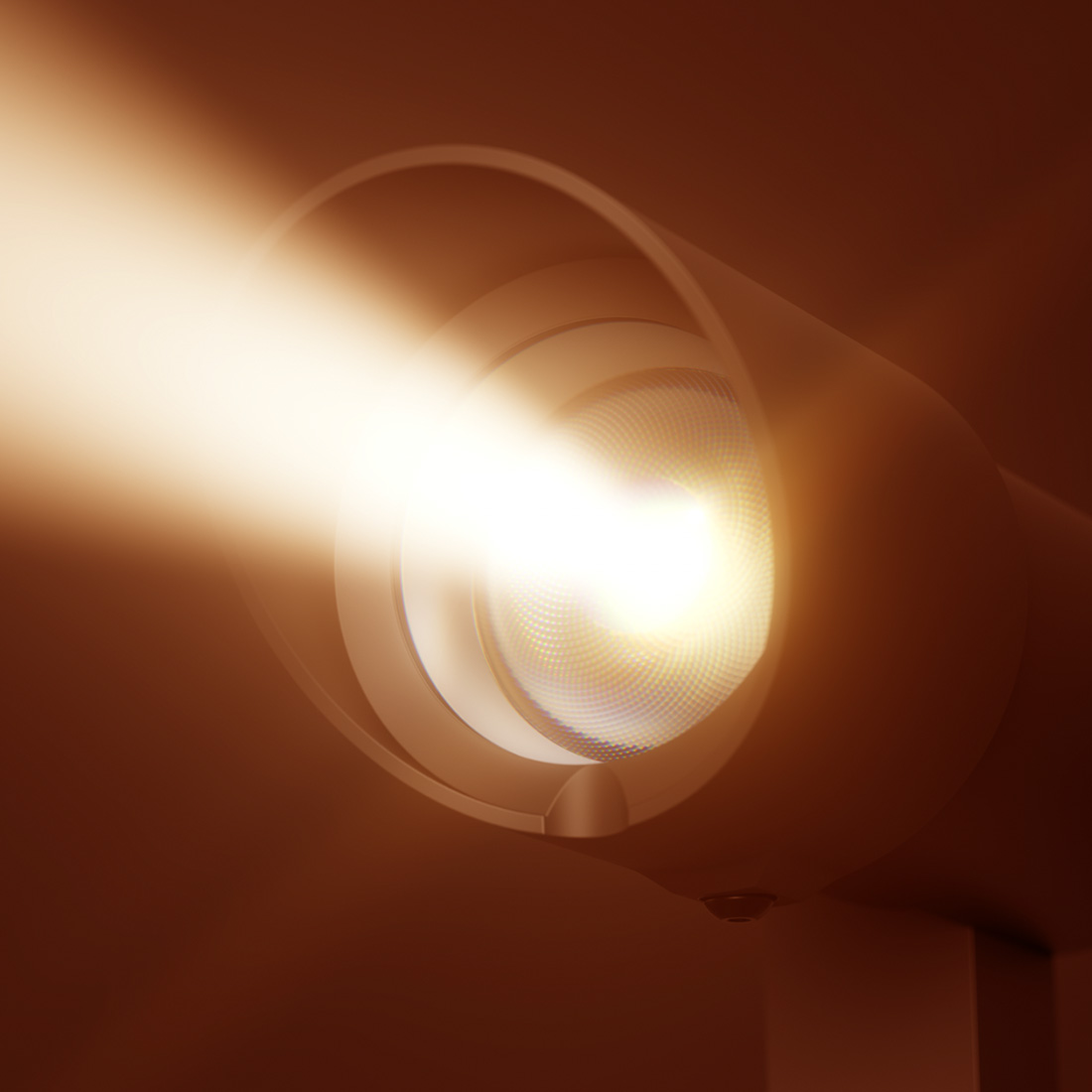
The LED sets the spectrum. The optics shape the beam. Fixture geometry and shielding control source visibility. Mounting and aiming determine where the light reaches.

Even a qualifying source can create spill light, glare, or direct source visibility when these elements are incorrectly selected or applied.

HK Lighting integrates the LED source, optics, fixture geometry, shielding options, and mounting and aiming capabilities as one controlled lighting system. Together, these attributes help project teams address the factors evaluated for FWC certification and local project approval.

Insights InPage Amber Square SM 2

Precise Beam Control

Controlled optics concentrate light on the intended surface. A well-controlled beam can illuminate a path, step, entrance, sign, or architectural feature with less spill and lower output.

Precise optical control is fundamental to HK Lighting product design. The Adapt Optic, for example, adjusts continuously from a 14° narrow spot to a 70° flood while maintaining less than 1% field light to minimize glare and preserve beam clarity.

Insights InPage Amber Square SM 3

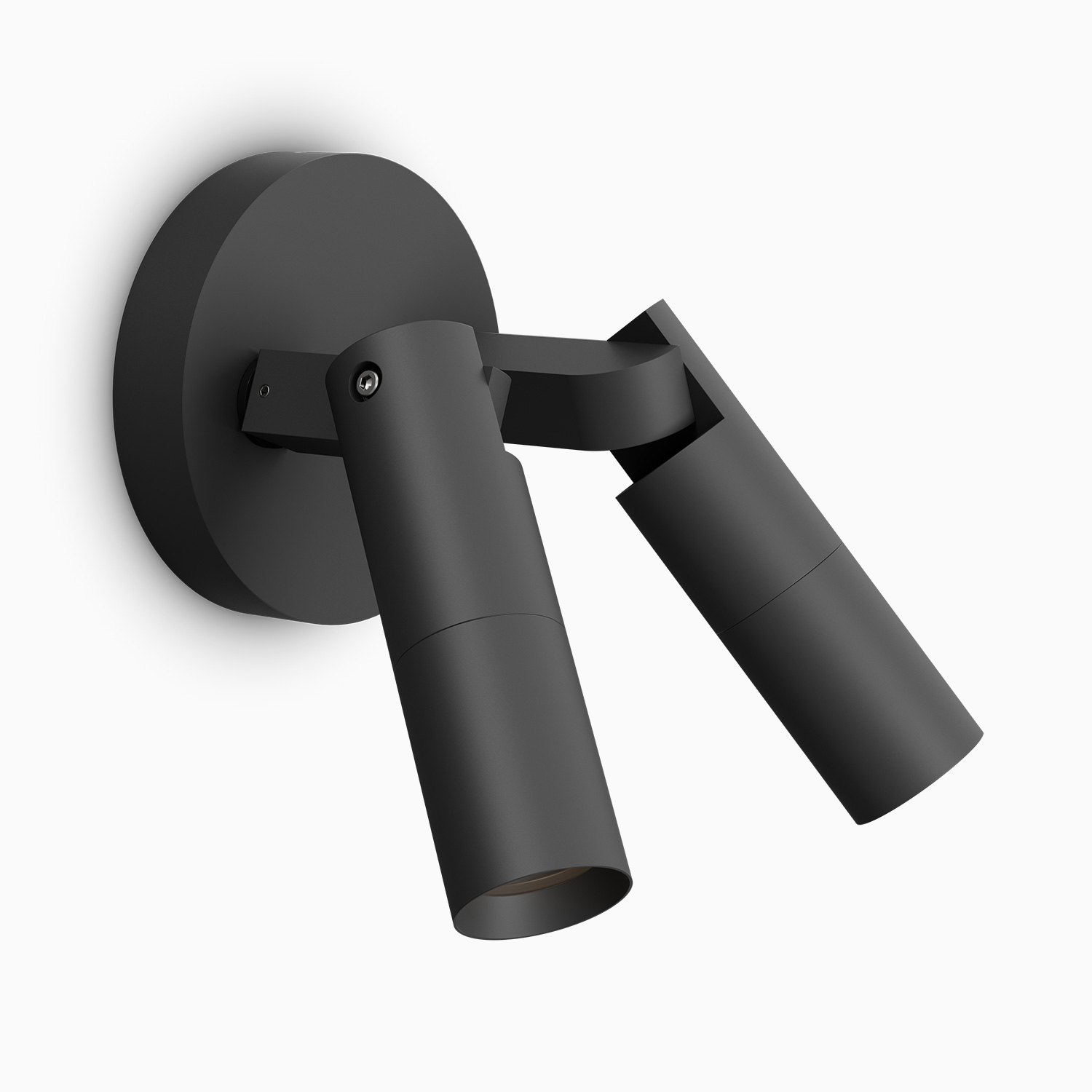
Directional Control

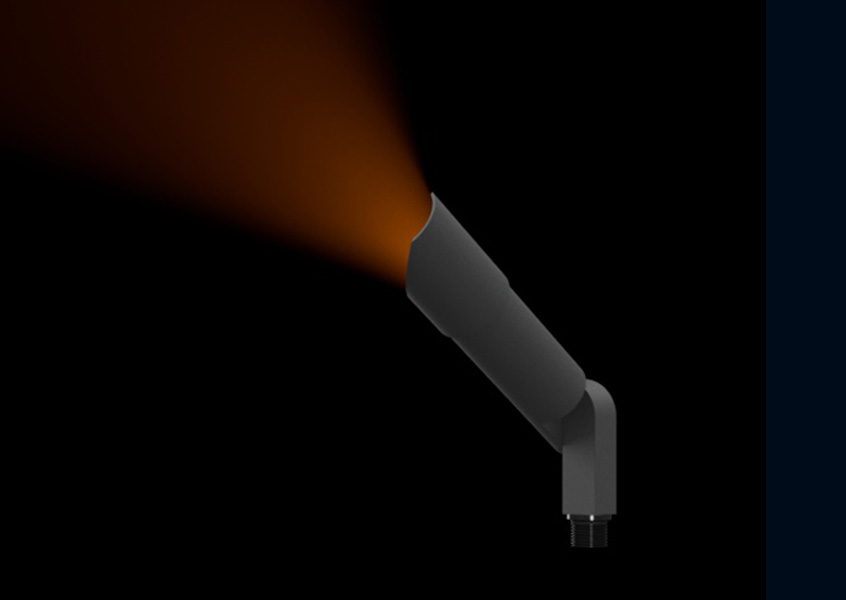
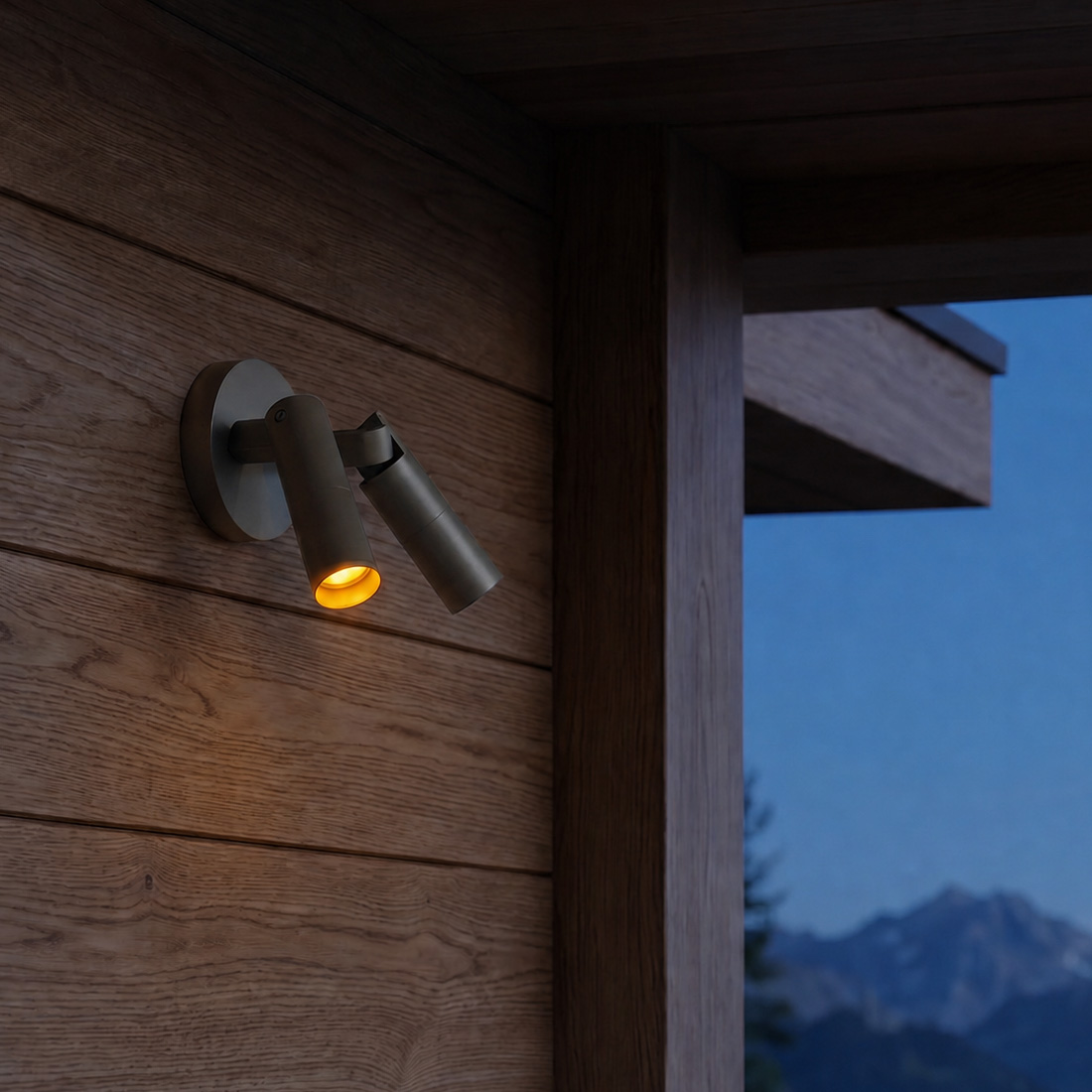
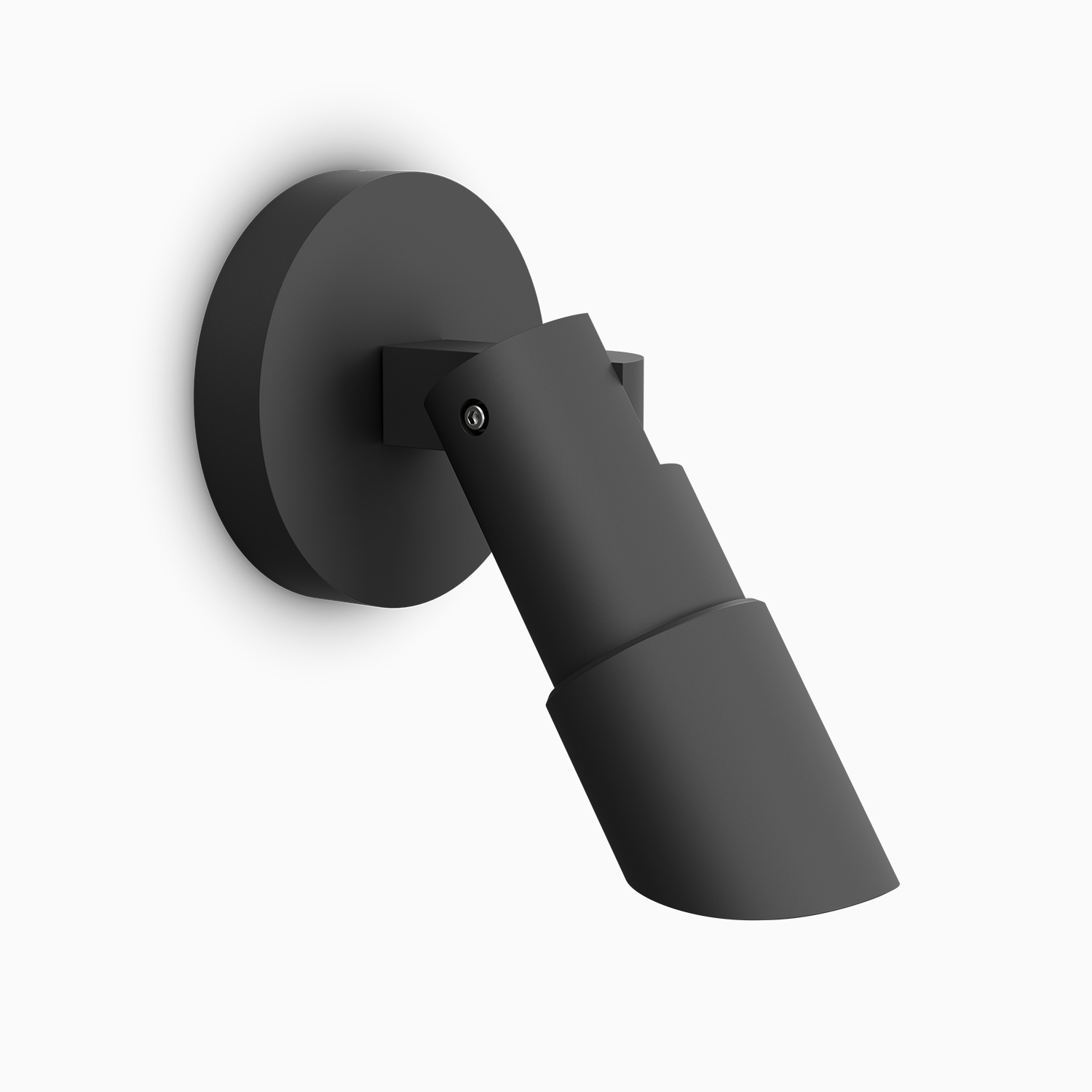
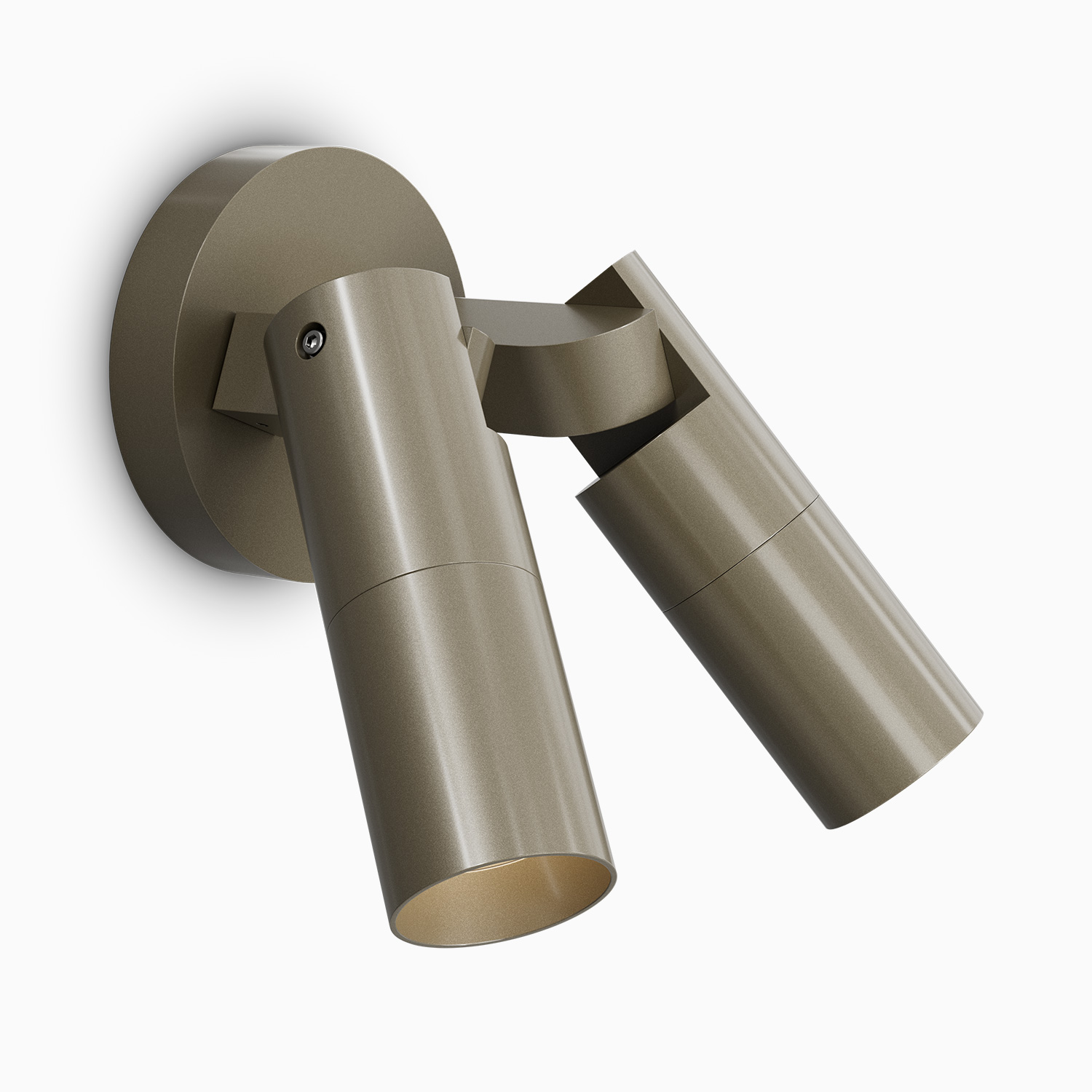
Adjustable fixtures direct light toward the task and away from water, dunes, vegetation, habitat edges, neighboring properties, and the night sky.

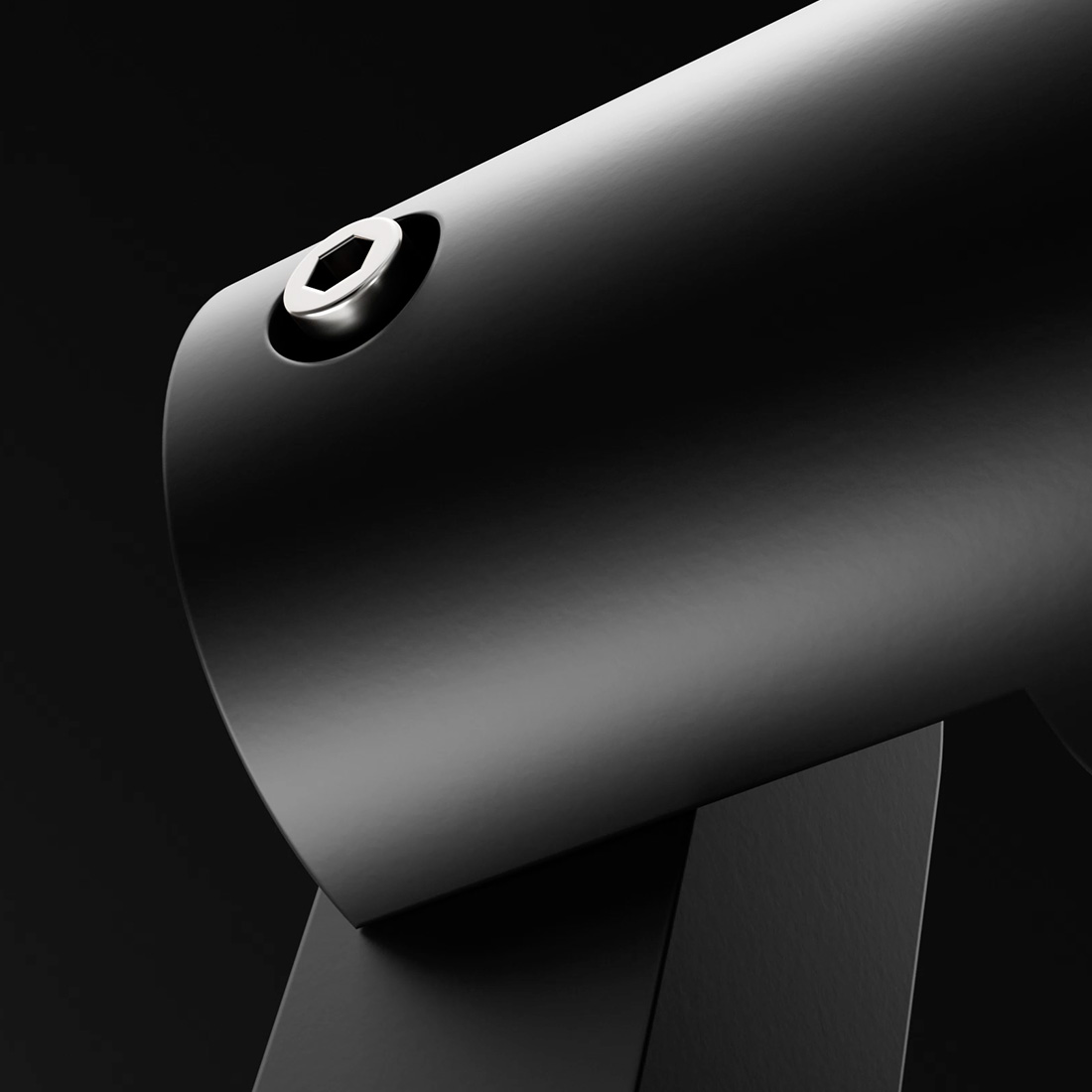
Adjustment is effective only when the fixture can be aimed accurately and hold its position. Poor aiming can expose the LED source or extend light into surrounding habitat.

Secure locking mechanisms help HK Lighting fixtures retain the specified aiming position in demanding outdoor conditions.

Insights InPage Amber Square GIF

Shielding and Source Control

Fixture geometry and available shielding help prevent the LED source or glowing lens from being directly visible from the protected area.

HK Lighting combines precision optics with fixture-specific shields, louvers, and accessories to reduce direct-source glare and limit light beyond the intended target. The required accessory and aiming position depend on the product and application.

Insights InPage Amber Square SM 5

Durable Coastal Construction

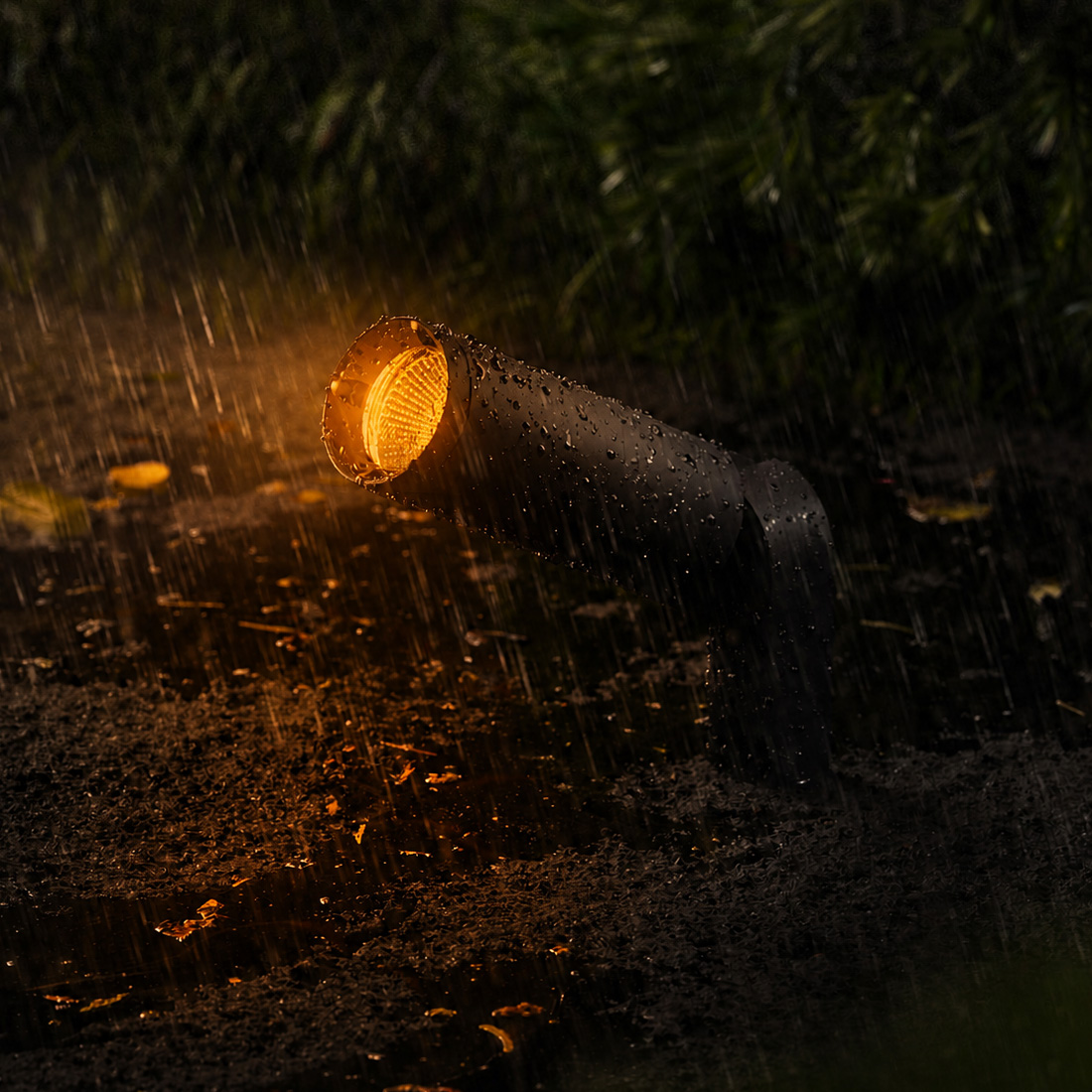
Coastal environments expose lighting equipment to moisture, salt, ultraviolet radiation, wind, and changing temperatures. Corrosion, movement, or material degradation can alter fixture alignment, shielding, and optical control.

HK Lighting brings extensive outdoor and marine-grade construction experience to these environments. Construction features include:

• Machined, corrosion-resistant 6061-T6 aluminum

• Anodized and powder-coated marine-grade finishes

• Seals, hardware, and mounting components engineered for lasting outdoor performance

Durable construction helps the fixture maintain its specified alignment, shielding, and optical performance over time.

Insights InPage Amber Square SM 1

Architectural Form and Performance

Wildlife-sensitive fixtures should integrate with the property during the day and place light precisely at night.

HK Lighting offers coordinated fixture families, refined architectural forms, durable finishes, and mounting options suited to varied architectural and landscape applications. Designers can address environmental requirements without compromising the visual language of the property.

Insights InPage Amber Square SM 6

Low Output by Design

Wildlife-sensitive lighting calls for the lowest output that completes the task. HK Lighting limits Narrow-band Amber LED configurations to 5W or less.

Direct-emission amber LEDs are more sensitive to heat than standard white LEDs. As junction temperature rises, amber light output and efficacy decline more quickly. Driving the source harder adds heat without producing an equal increase in useful light.

Limiting wattage supports thermal performance.

HK Lighting pairs this controlled output with precise optics and fixture forms suited to the application. More of the available light reaches the intended task, reducing the need for higher wattage and unnecessary illumination.

The result is effective, low-level lighting that supports human visibility while limiting artificial light beyond the task.

In wildlife-sensitive applications, performance is measured by control, not maximum output.
Insights InPage Amber Wide 2

Where to Use Narrow-Band Amber LED

Use Narrow-band Amber LED where wildlife-lighting criteria or local requirements call for a qualifying long-wavelength source, or where reducing short-wavelength light supports habitat protection goals.

APPLICATIONS MAY INCLUDE:
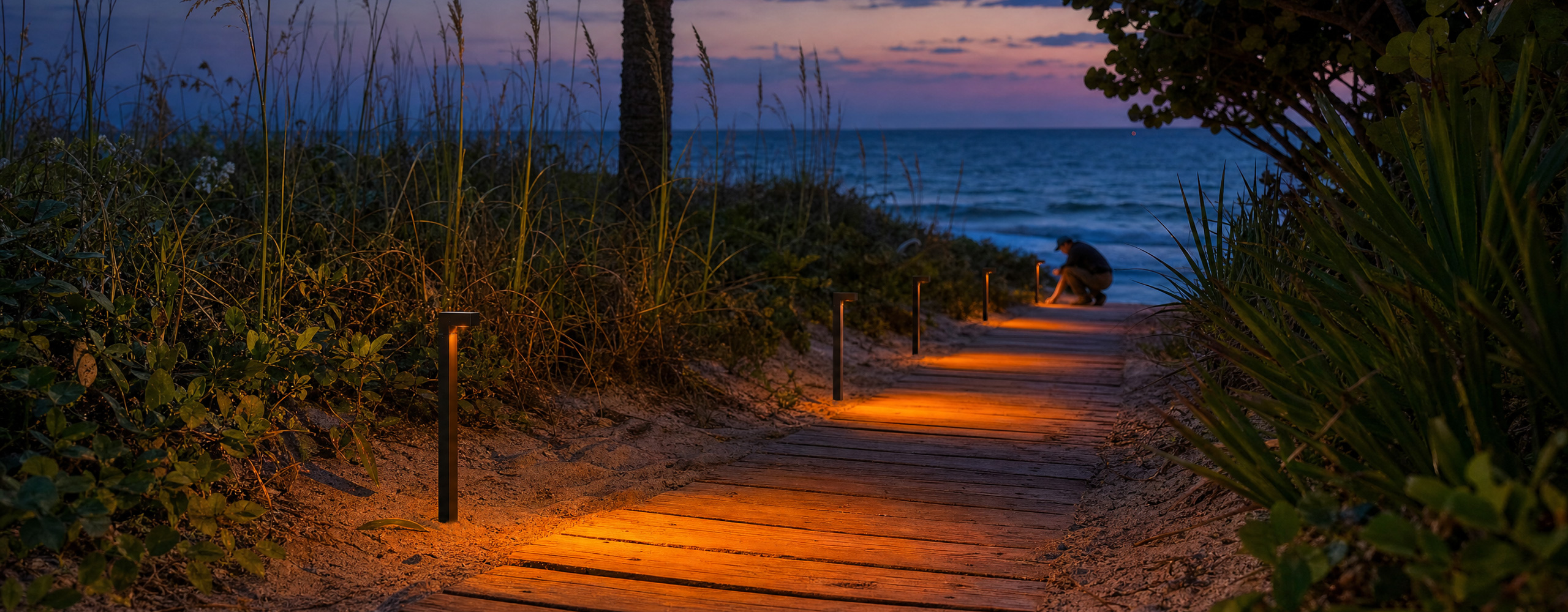
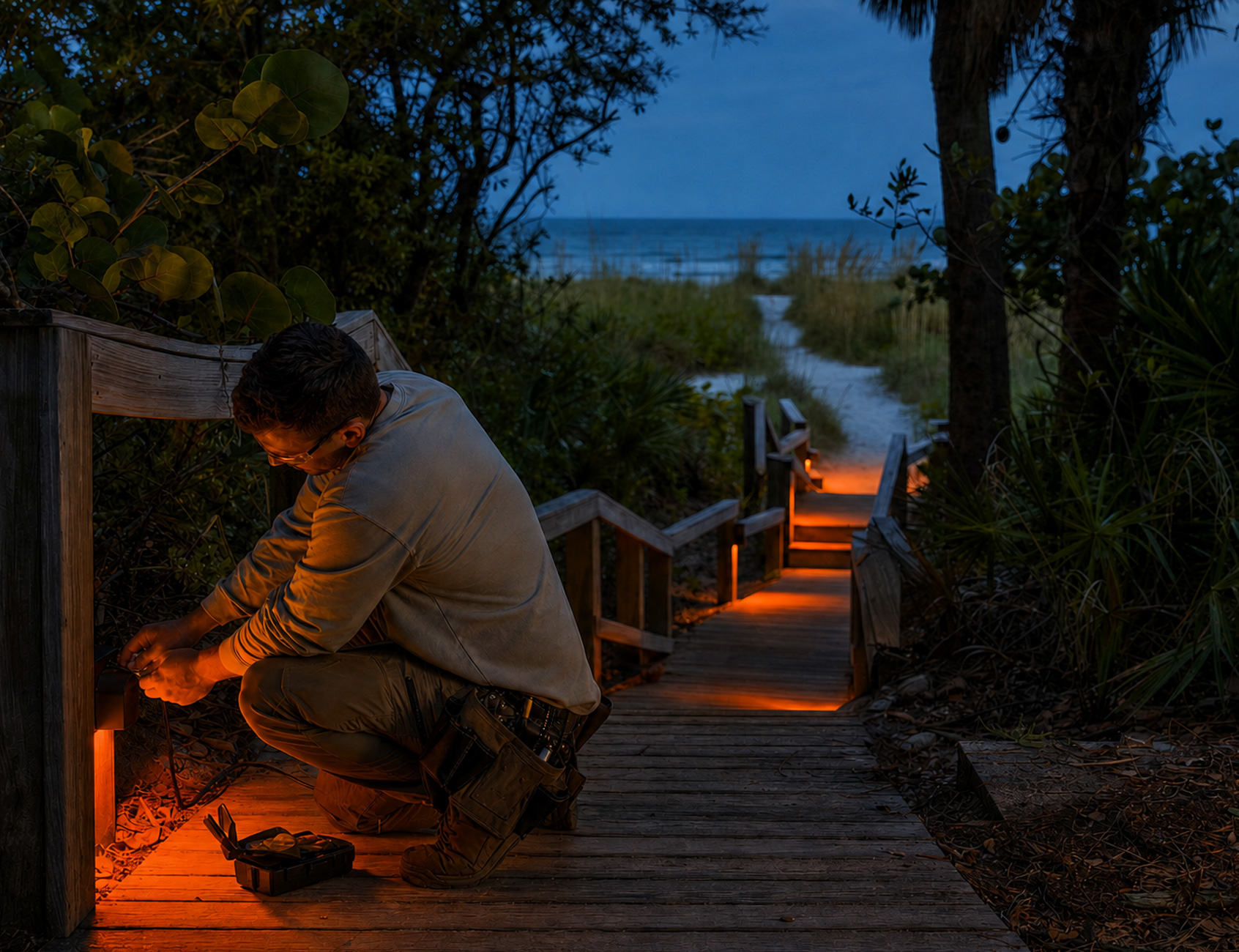
Amber lighting at dune crossings, beach access routes, boardwalks, and coastal walkways
Regular lighting at dune crossings, beach access routes, boardwalks, and coastal walkways
Dune crossings, beach access routes, boardwalks, and coastal walkways.
Amber lighting at marinas, docks, and waterfront properties near sensitive habitat
Regular lighting at marinas, docks, and waterfront properties near sensitive habitat
Marinas, docks, and waterfront properties near sensitive habitat.
Amber lighting at paths, steps, entrances, and changes in elevation within wildlife-sensitive areas
Regular lighting at paths, steps, entrances, and changes in elevation within wildlife-sensitive areas
Paths, steps, entrances, and changes in elevation within wildlife-sensitive areas.
Amber lighting at properties adjacent to wildlife habitat and wildlife corridors
Regular lighting at properties adjacent to wildlife habitat and wildlife corridors
Properties adjacent to wildlife habitat and wildlife corridors.
Amber lighting at conservation areas, protected parks, and environmentally sensitive sites
Regular lighting at conservation areas, protected parks, and environmentally sensitive sites
Conservation areas, protected parks, and environmentally sensitive sites.
Amber lighting at beachfront and coastal properties adjacent to sea turtle nesting habitat
Regular lighting at beachfront and coastal properties adjacent to sea turtle nesting habitat
Beachfront and coastal properties adjacent to sea turtle nesting habitat.
Amber lighting for projects governed by FWC criteria or local long-wavelength lighting requirements
Regular lighting for projects governed by FWC criteria or local long-wavelength lighting requirements
Projects governed by FWC criteria or local long-wavelength lighting requirements.

Narrow-band Amber LED is a specialized light source, not a universal replacement for white light. The narrow spectrum changes how surfaces, finishes, vegetation, clothing, and vehicles appear.

Applications that depend on accurate color recognition or high output may require another lighting approach. When wider coverage is needed, controlled distribution and careful fixture placement can extend illumination without relying on excessive wattage.

A project mockup can confirm visibility, surface appearance, beam placement, glare, and source visibility before the specification is finalized.

Insights SectionDividers 2 Amber 1

Designing a Wildlife Lighting Installation

HK Lighting provides the optical, shielding, mounting, and control options needed to manage light precisely. The final result depends on how the fixture is specified, installed, and viewed from the protected area.


Insights InPage Amber Wide 3

Purpose and Output

Define the visual task and use the lowest output that completes it.

Mounting, Aiming, and Shielding

Mount the fixture as low as practical, aim it away from sensitive areas, and shield the source from direct view.

Distribution and Reflected Light

Review the complete photometric distribution. Consider light reflected from pavement, walls, water, sand, finishes, and landscaping.

Operating Time

Provide light only when it serves a defined need. Use dimming, timers, occupancy sensing, or scheduled shutoff when appropriate.

Field Verification

After dark, review the completed installation from the protected viewpoint. Correct visible sources, glare, spill light, or unnecessary illumination.

When applicable, FWC certification covers only an approved product configuration.  It does not verify the final installation. A qualifying or certified fixture can still fail local project review when it is installed incorrectly or used outside its approved conditions.


Insights SectionDividers 2 Amber 2b

HK Lighting Narrow-Band Amber Products

Select HK Lighting product families are available with direct-emission Narrow-band Amber LED technology. Choose a category to review available products, performance, and specification options.

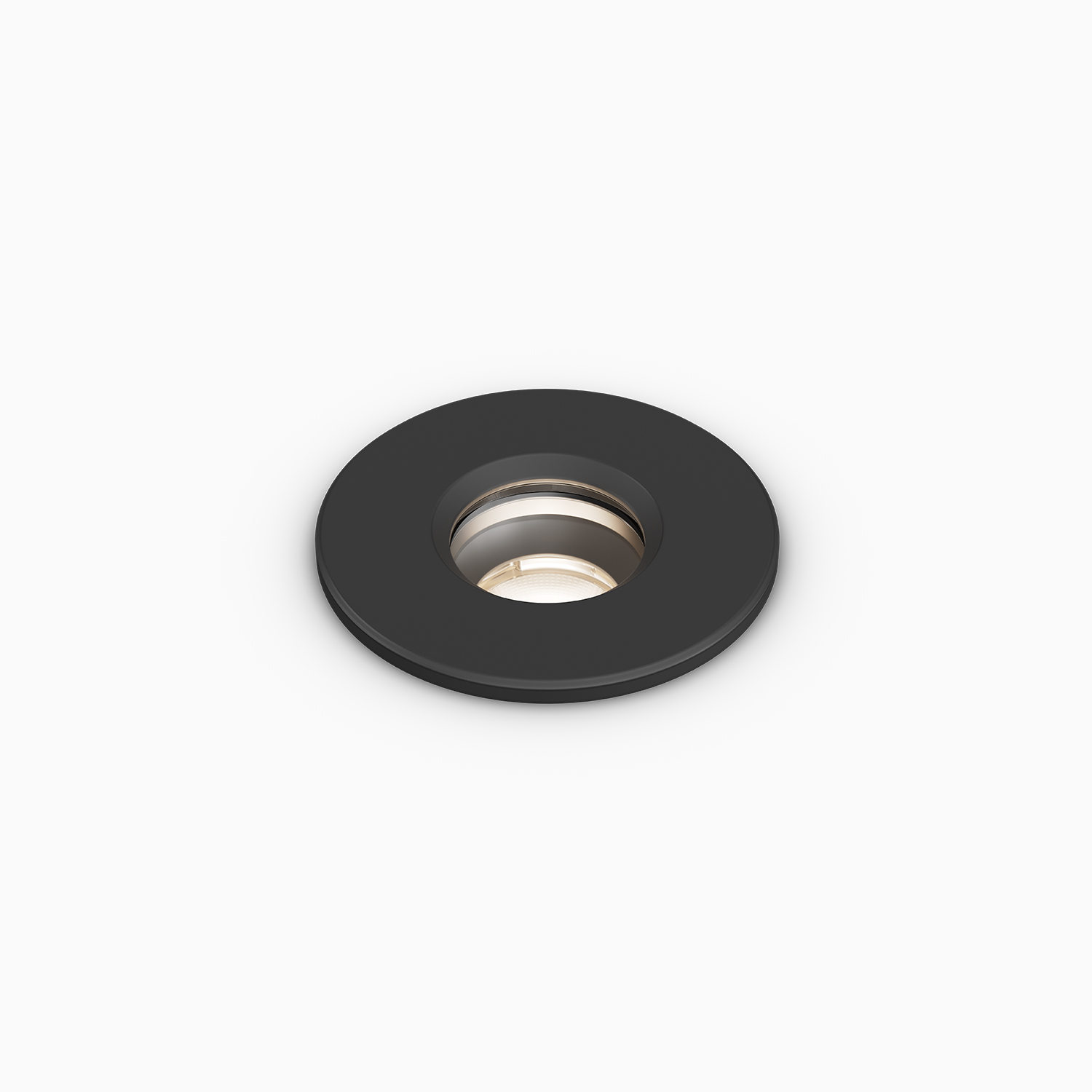
Accent & Landscape

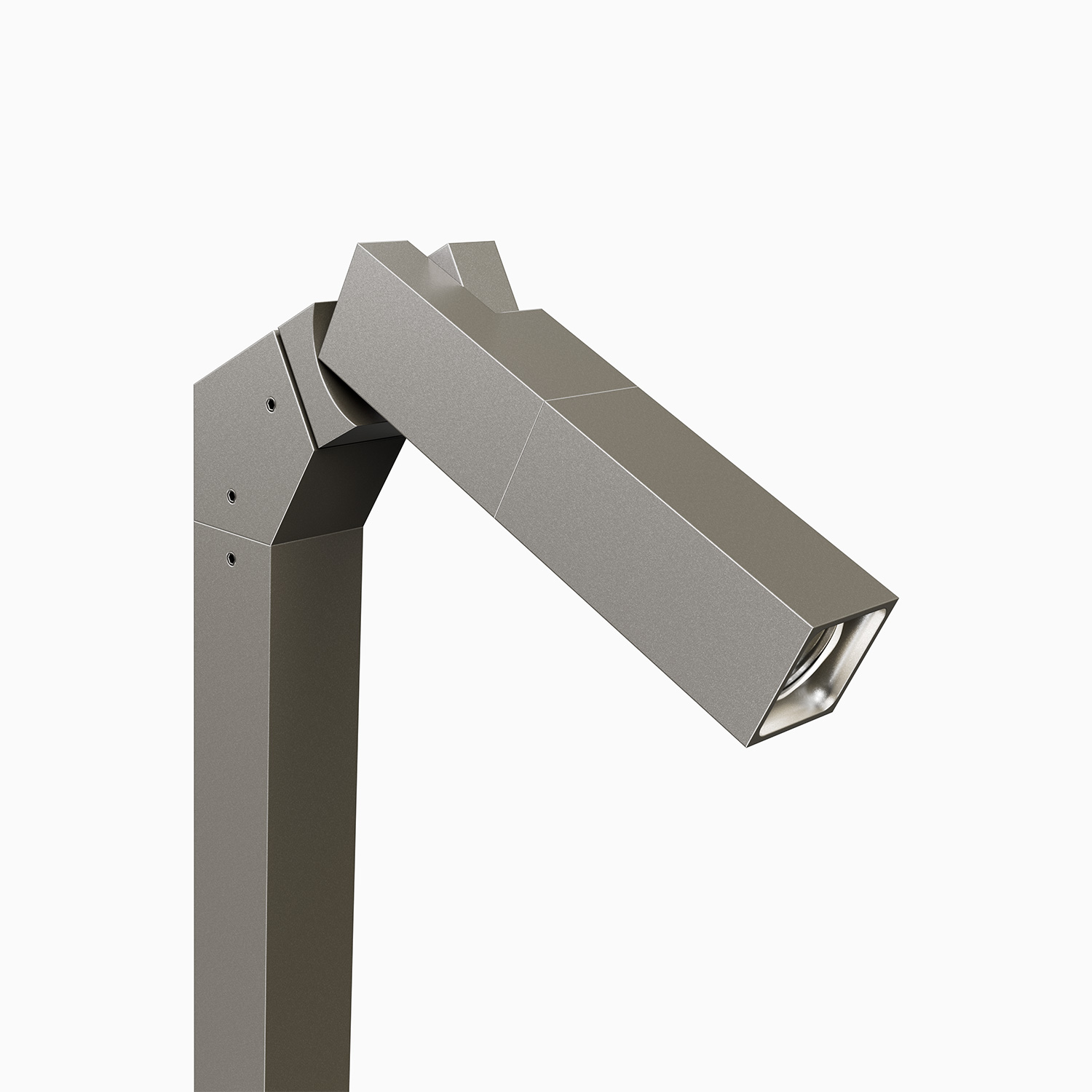
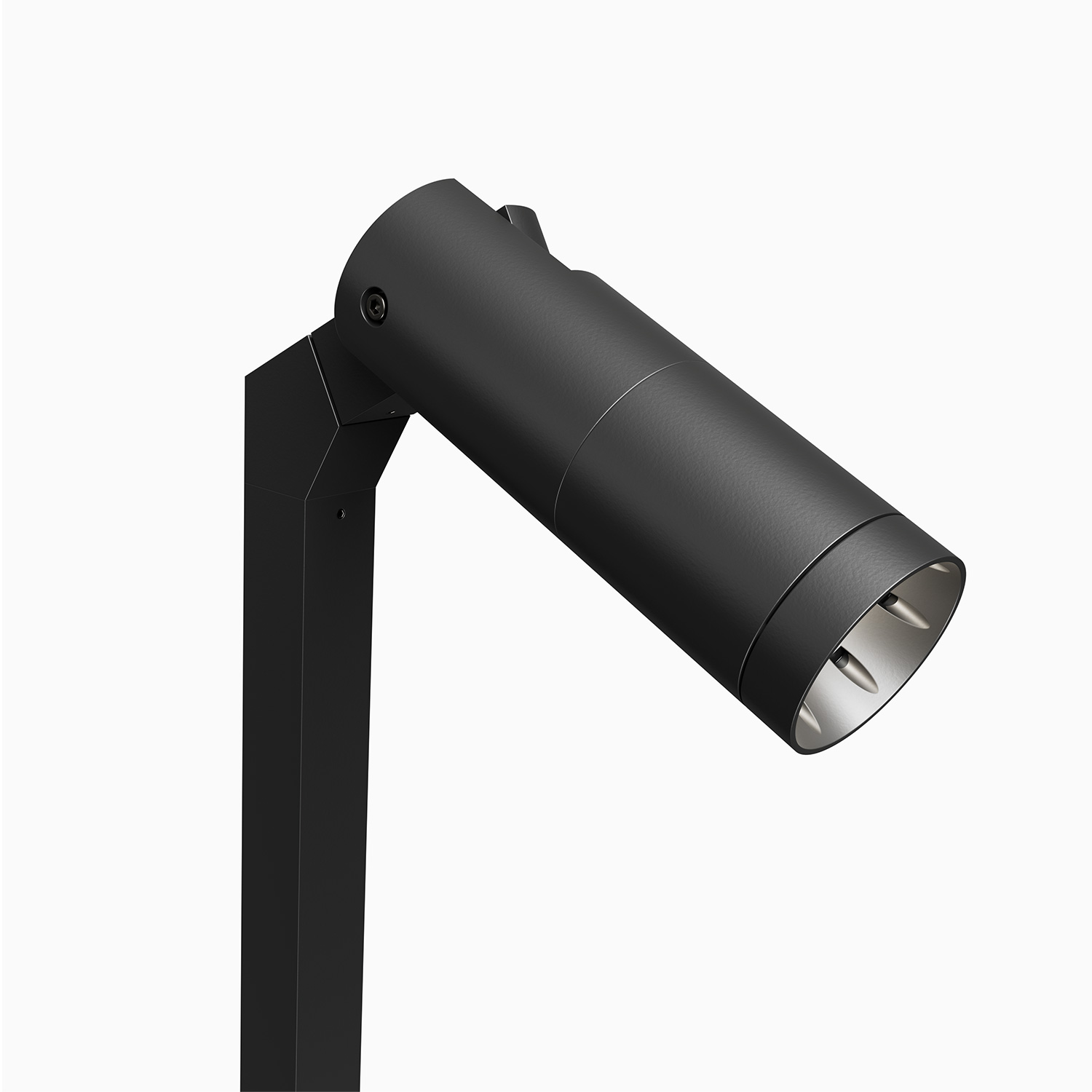
Precise directional lighting for defined architectural and landscape targets.

Readymade

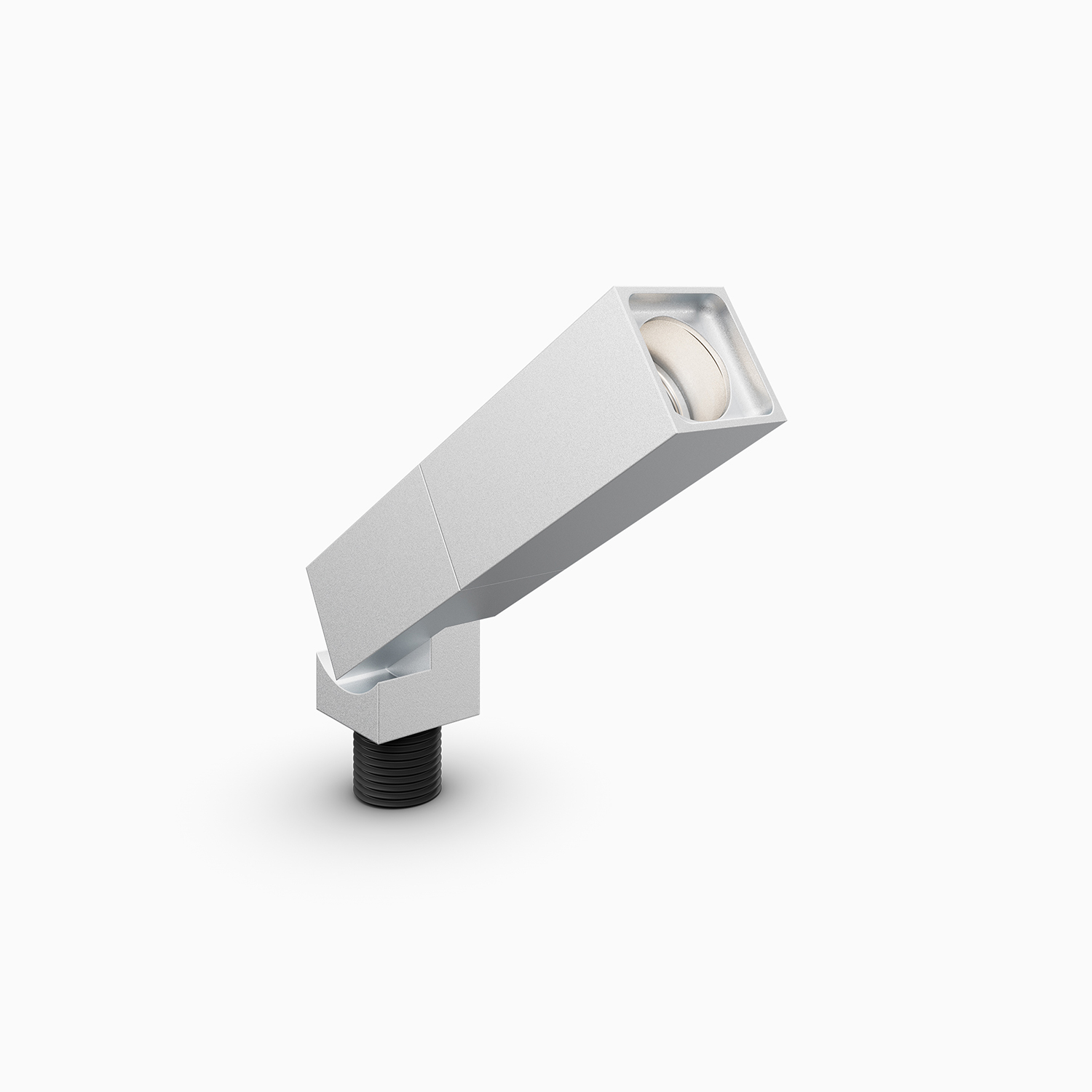
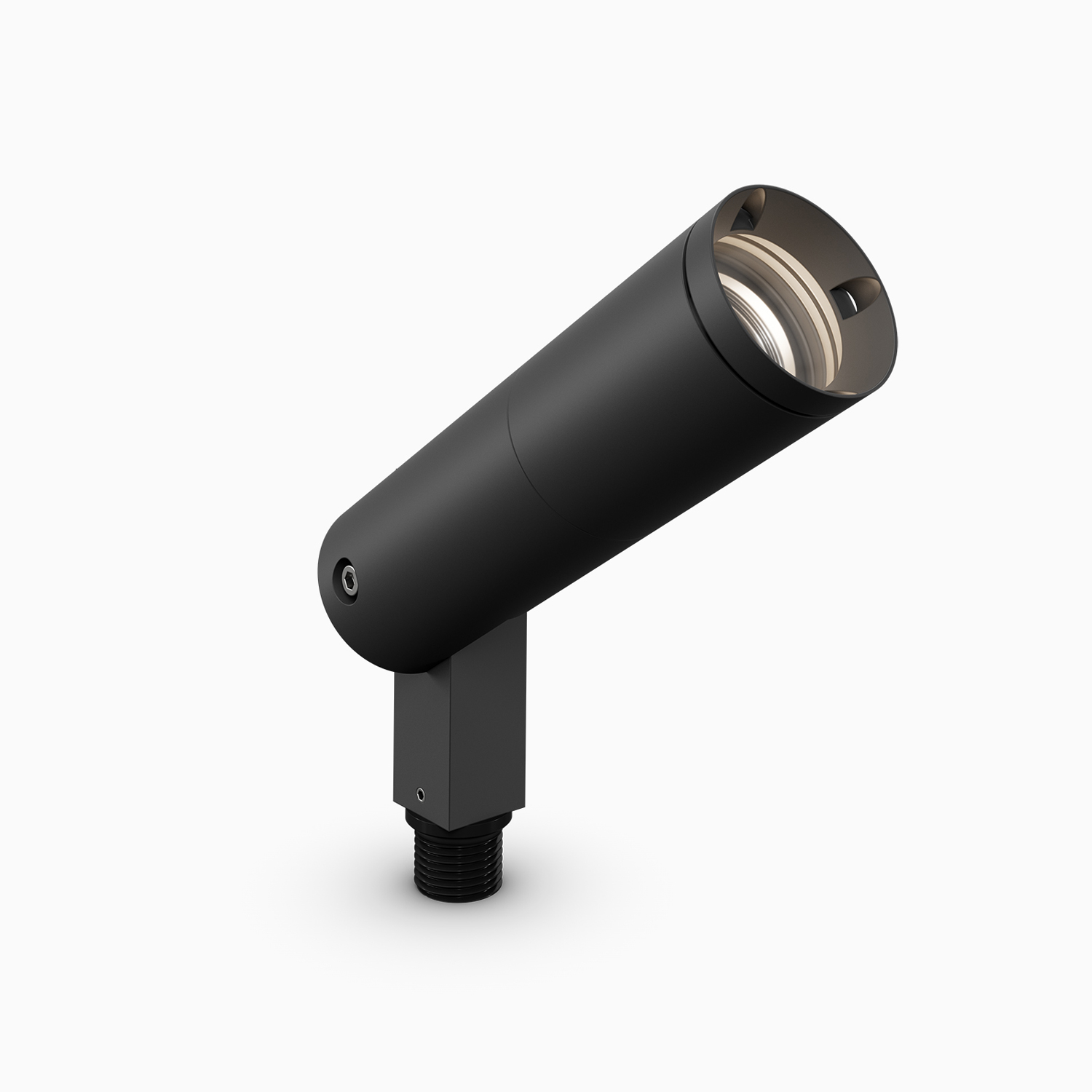
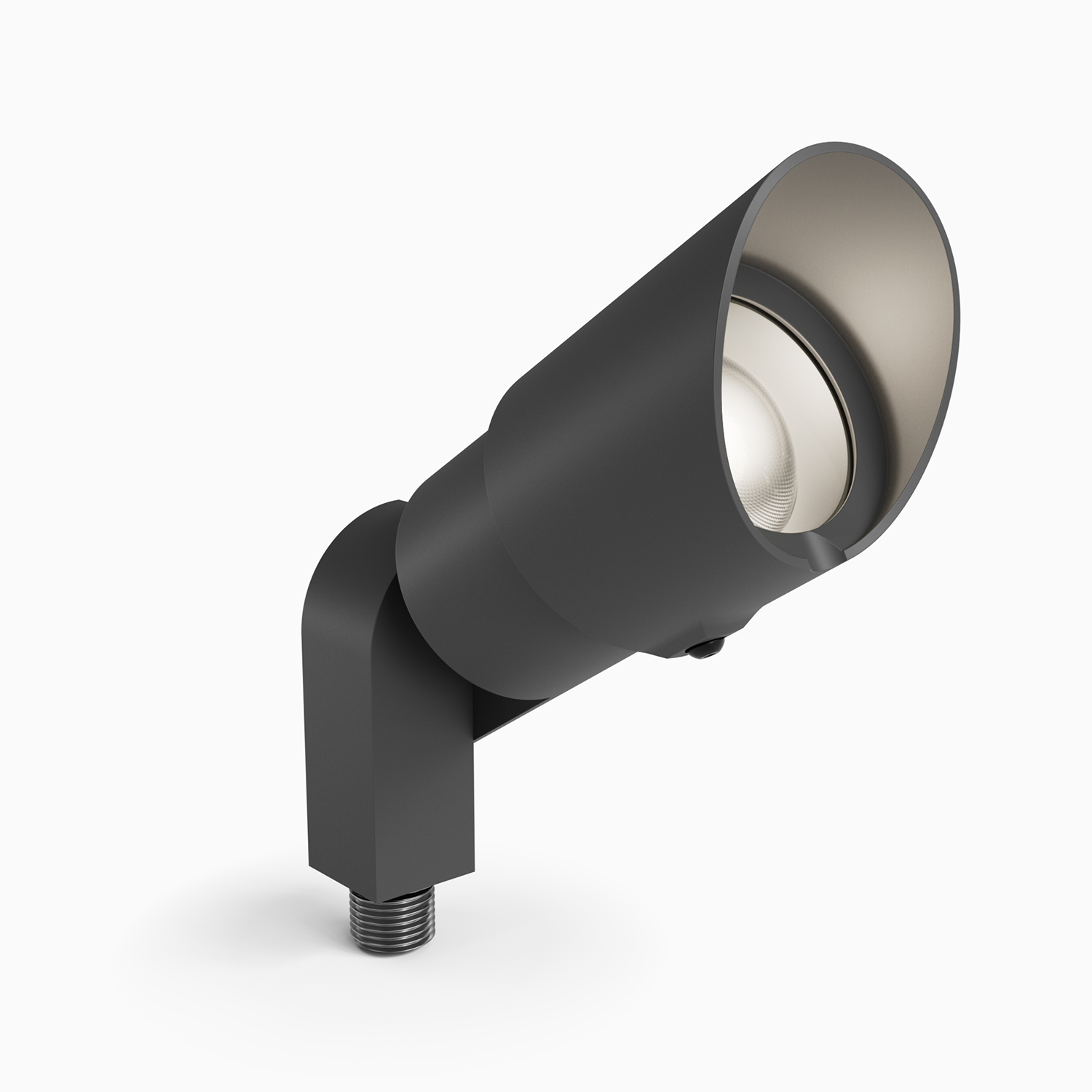
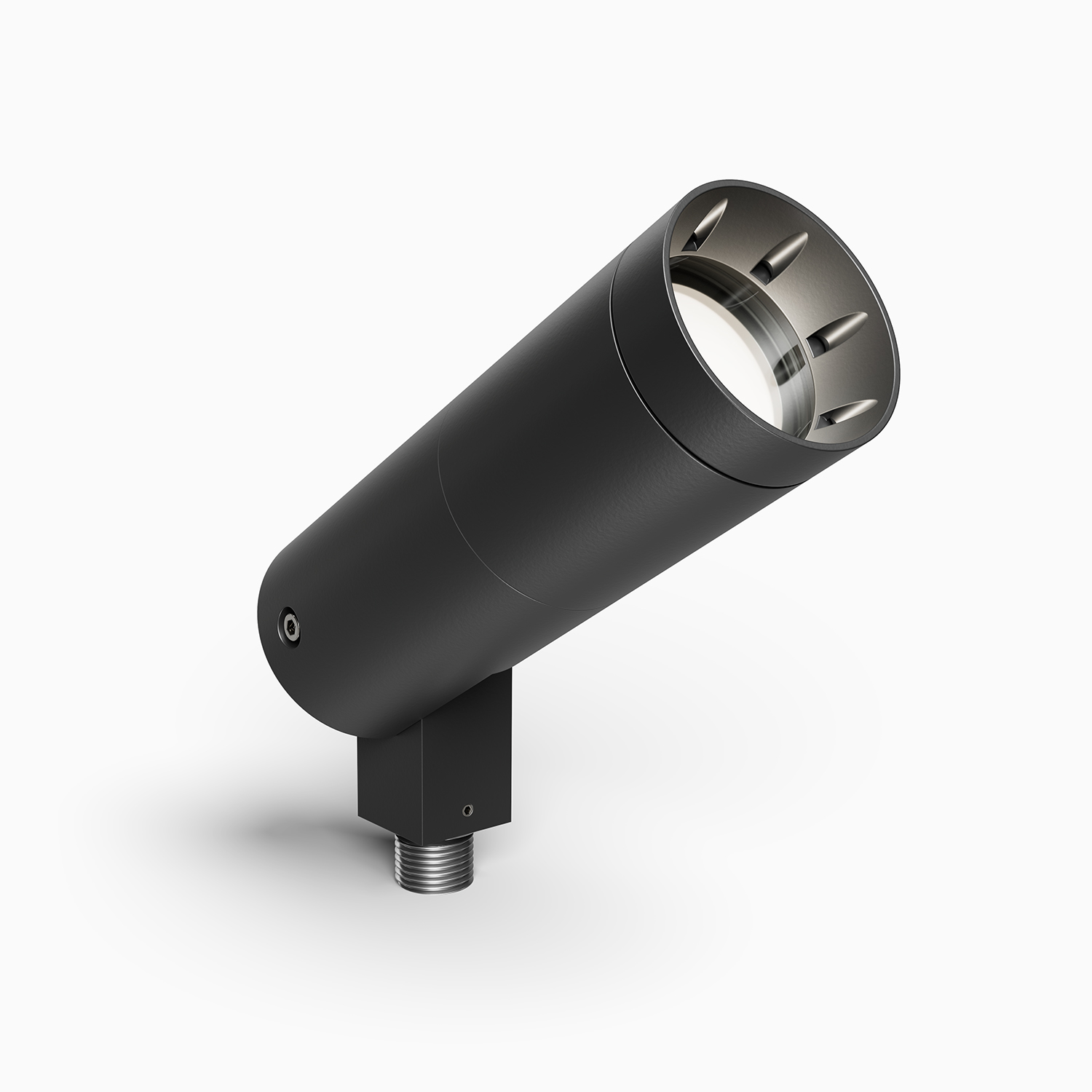
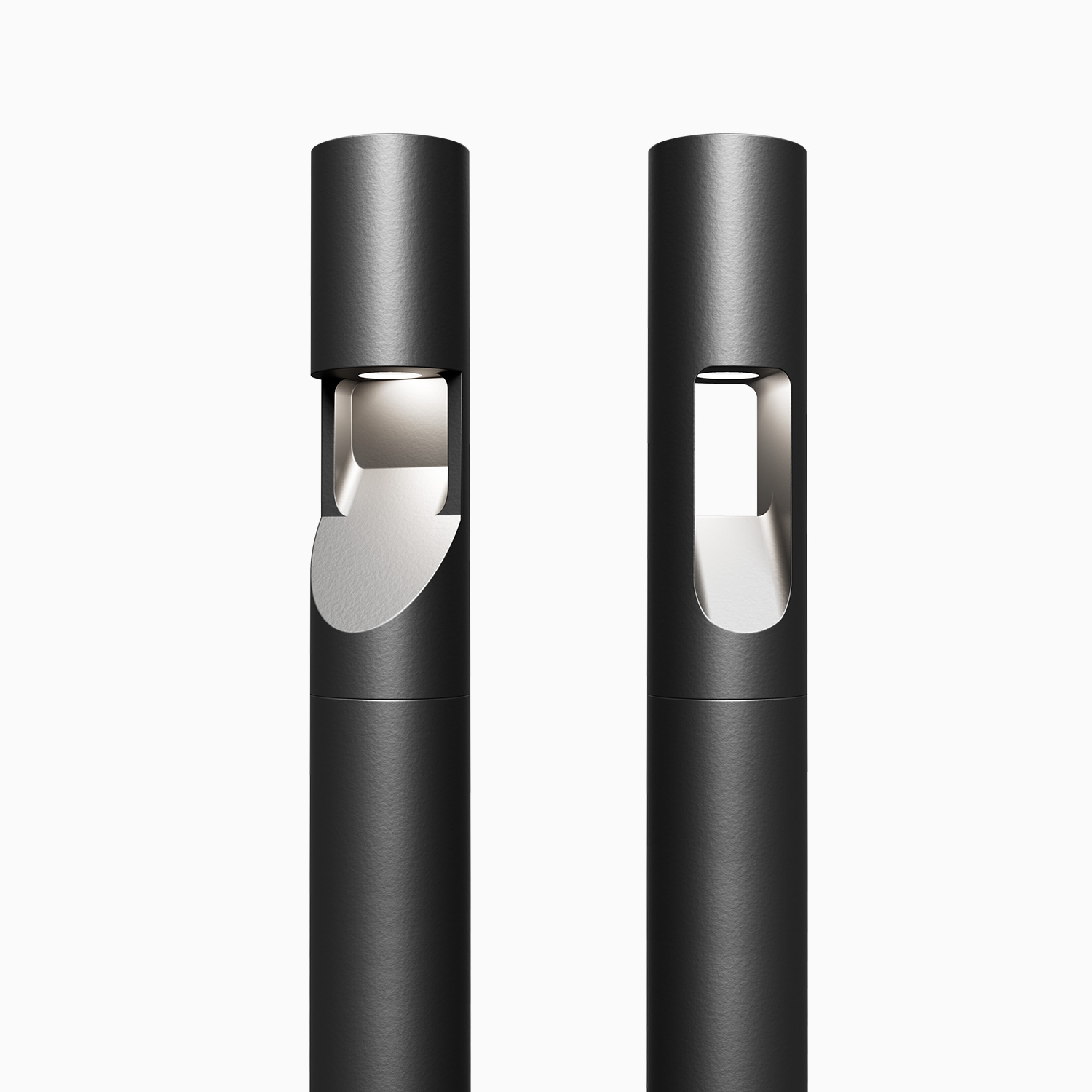
ZXL08

ACCENT & LANDSCAPE | ZX08 Series | 1.25″ dia.
3W ( 200lm ) | 12V | HK LED, Amber

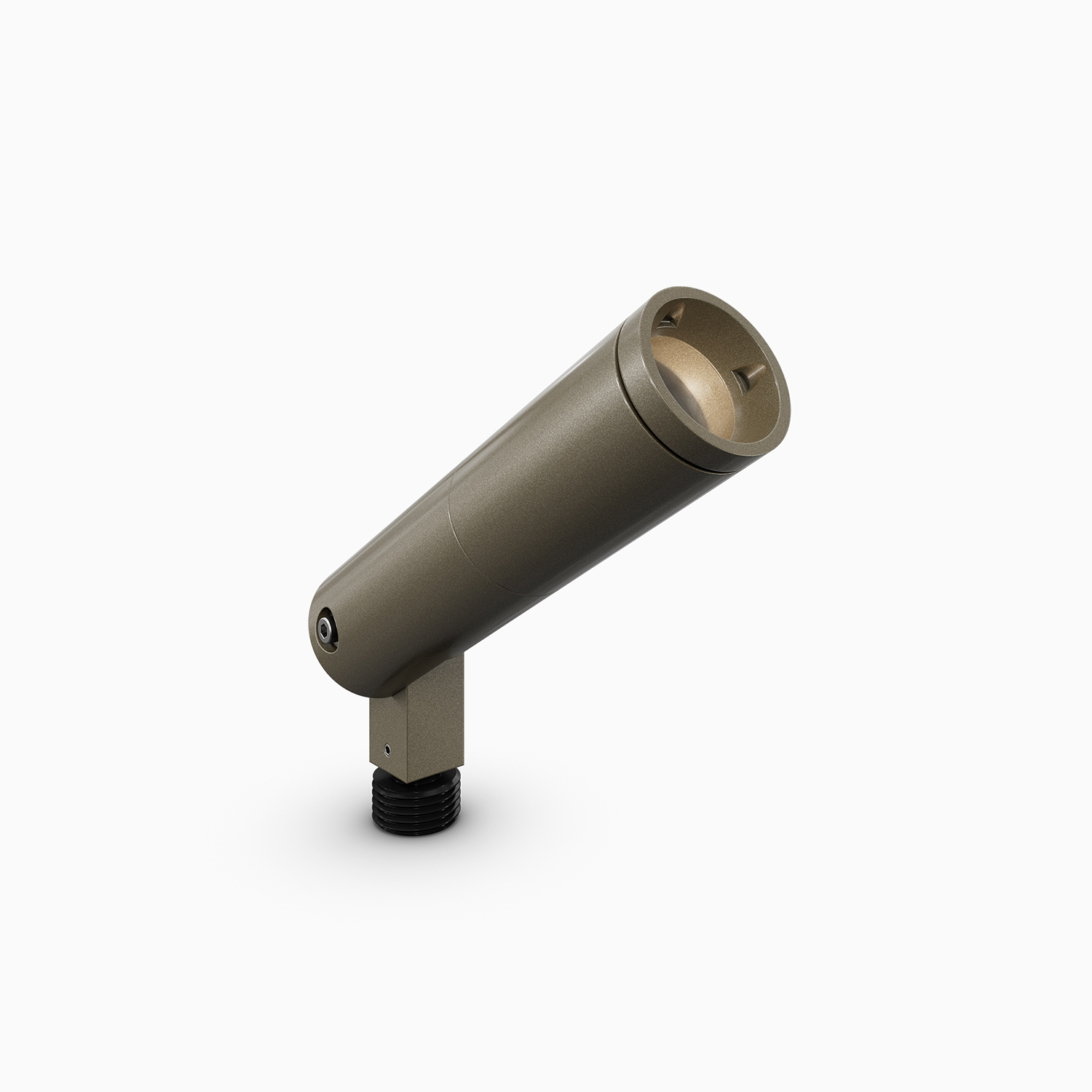
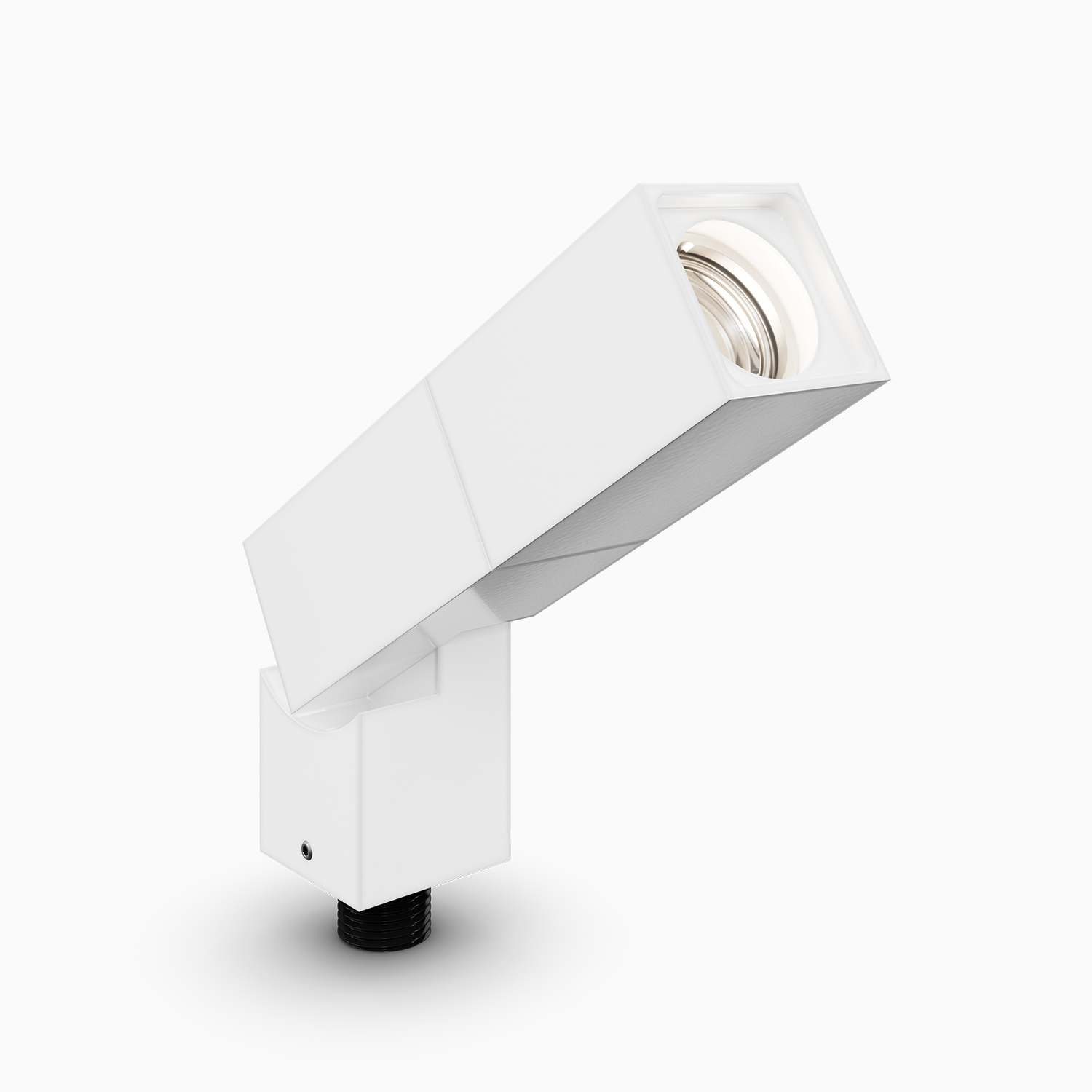
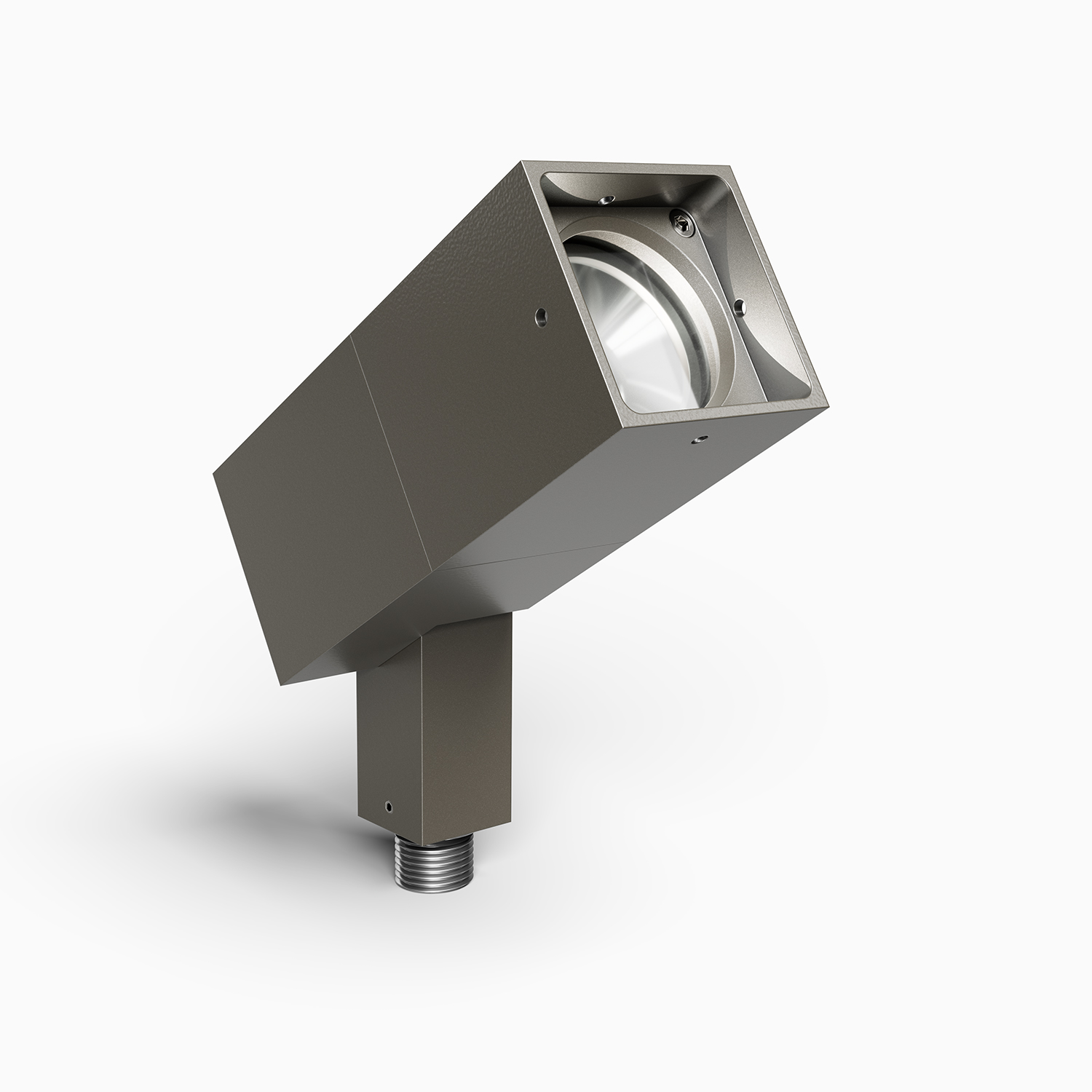
ZXL08 Square

ACCENT & LANDSCAPE | ZX08 Series | 1.13″
3W ( 200lm ) | 12V | HK LED, Amber
Readymade

ZXL11

ACCENT & LANDSCAPE | ZX11 Series | 1.65″ dia.
5–7W ( 450–675lm ) | 12V | HK LED, Amber

ZXL11 Square

ACCENT & LANDSCAPE | ZX11 Series | 1.57″
5–7W ( 450–675lm ) | 12V | HK LED, Amber
Readymade

ZXA16 Adapt

ACCENT & LANDSCAPE | ZX16 Series | 2.25″ dia.
5–10W ( 500–950lm ) | 12V | HK LED, Amber
Readymade

ZXL16

ACCENT & LANDSCAPE | ZX16 Series | 2.25″ dia.
5–10W ( 500–900lm ) | 12V | HK LED, Amber

ZXL16 Square

ACCENT & LANDSCAPE | ZX16 Series | 2.25″
5–10W ( 500–900lm ) | 12V | HK LED, Amber

Path & Bollard

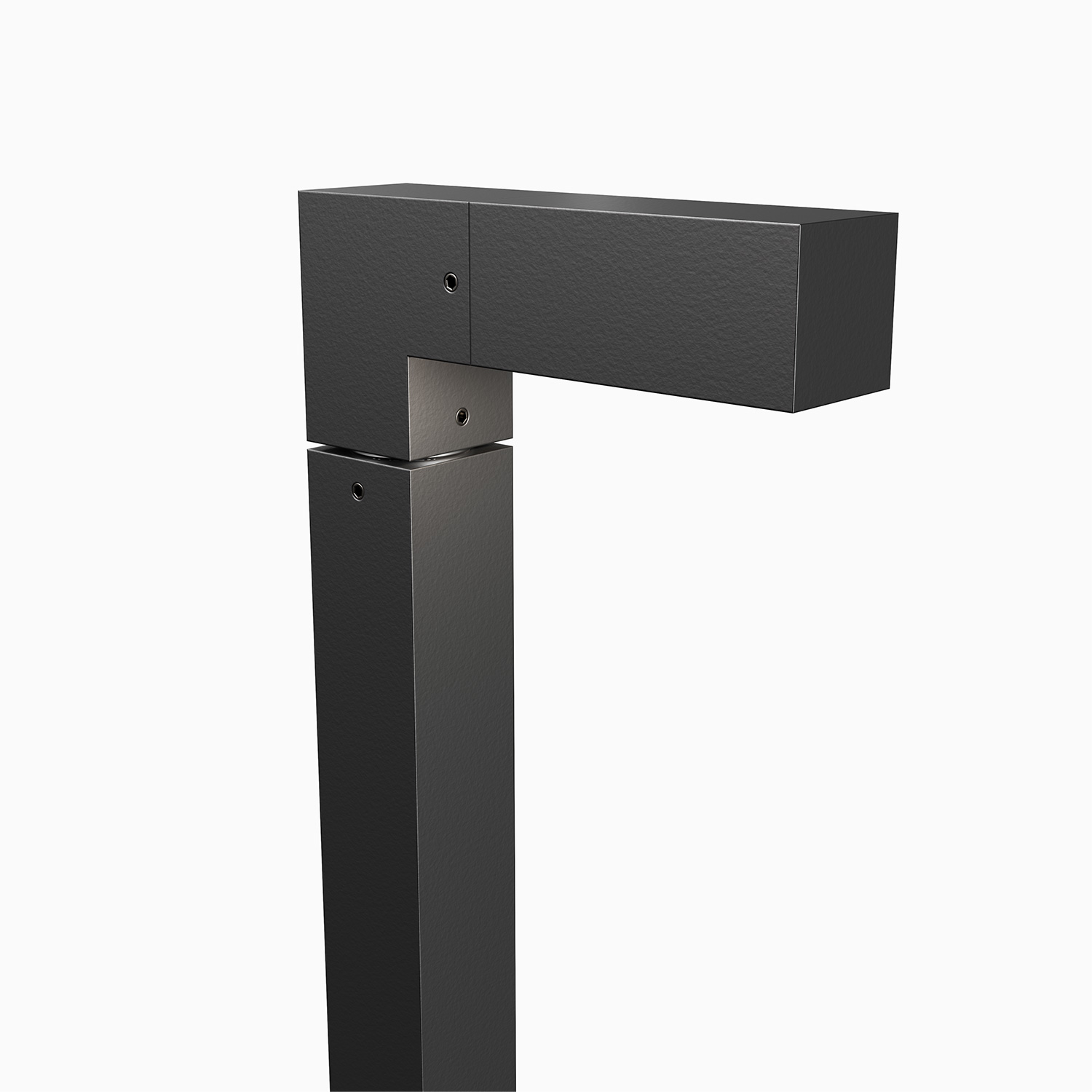
Low-Level Illumination for walkways, transitions, and pedestrian circulation

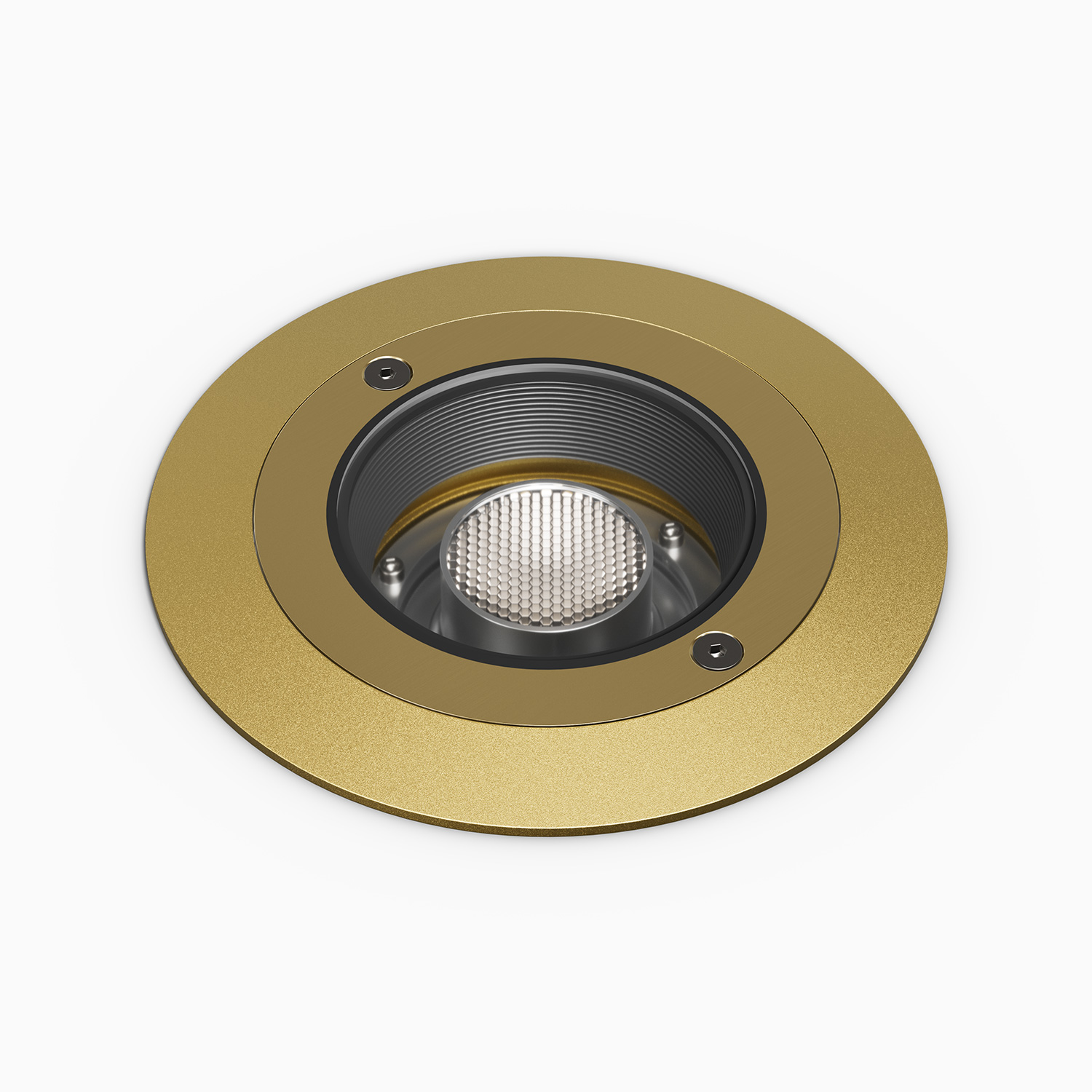
Step & In Ground

Low-profile illumination for steps, edges, markers, and grade-level applications.

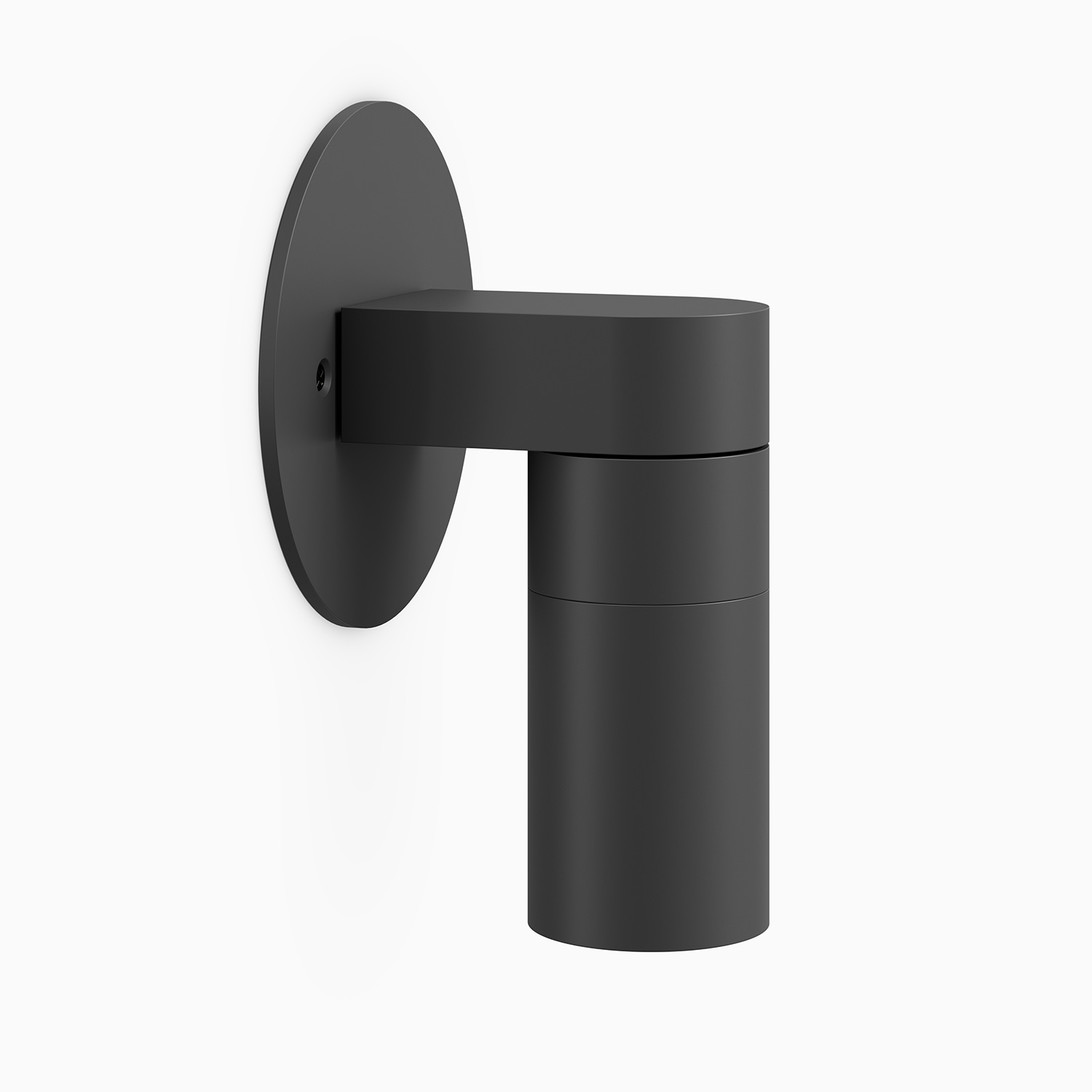
Wall Mount

Controlled building-mounted lighting for entrances, circulation areas, and defined exterior tasks.

Area & Security

Targeted coverage for access, circulation, and defined security applications.

Flood & Wall Wash

Controlled distribution for larger defined surfaces and focused coverage.

Insights SectionDividers Amber 4

Product Qualification and Project Approval

An Amber designation alone does not establish that a product is appropriate for a regulated or wildlife-sensitive project. Product qualification and final approval depend on the exact configuration, installation, and requirements governing the project.

Insights InPage Amber Wide 4

Understanding FWC Certification

FWC has certified specific fixture and lamp models, approved options, required accessories, and permitted applications. Certification does not provide blanket approval for every product configuration or installation.

FWC currently lists its Wildlife Lighting Certification Program as closed to new submissions while the agency updates its review process. Products certified through earlier review cycles remain listed. FWC states that certifications are valid for two years, so appearance in the product directory alone should not be treated as evidence of current certification status.

A product that does not appear on the list may still meet FWC Wildlife Lighting Criteria, but it must not be represented as FWC certified. Acceptance of a non-listed product depends on its documented performance and the requirements of the governing jurisdiction.

HK Lighting Narrow-band Amber LED products are engineered to address the same spectrum, output, shielding, and application factors established by FWC. Direct-emission LEDs, limited wattages, precise optics, fixture-specific shielding, and architectural forms give project teams a controlled lighting solution for local evaluation.

Before specifying or approving a fixture, verify:

  1. Project Requirements. Review applicable state, county, municipal, and project-specific criteria.
  2. Spectral and Photometric Performance. Confirm spectral data, delivered output, and IES data for the exact LED and product configuration.
  3. Complete Fixture Configuration. Verify cutoff, source visibility, optical distribution, and required shields, louvers, baffles, and mounting accessories.
  4. Installation Requirements. Confirm permitted mounting height, orientation, aiming, controls, and final commissioning requirements.
  5. Certification or Qualification Status. Verify the exact model, options, accessories, application caveats, expiration date, and current certification status. For non-listed products, confirm the documentation required for local review.

No LED chip or fixture can guarantee project compliance. Property location, habitat, species, season, product configuration, and installation can all affect approval.

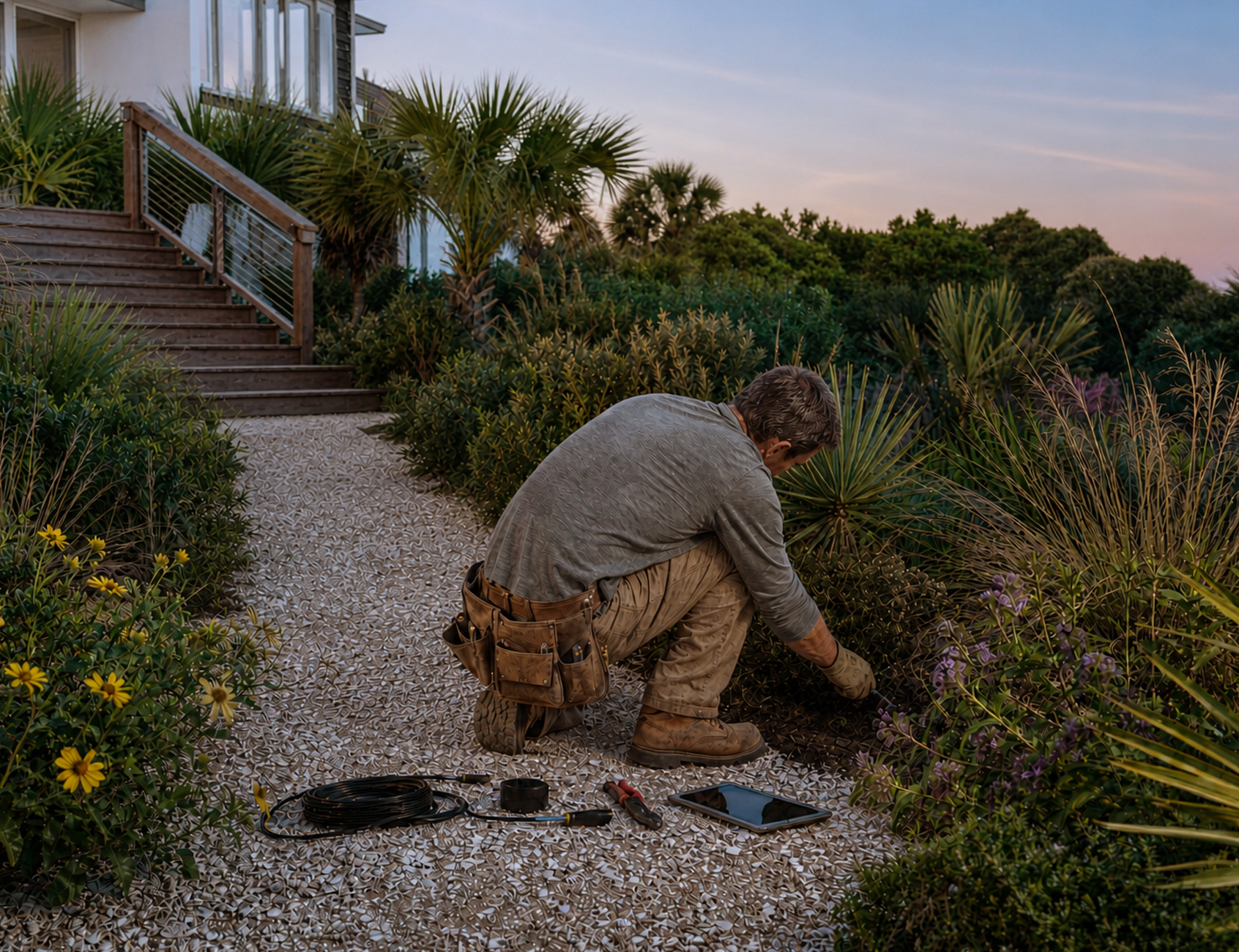
Coordinate with the authority having jurisdiction before finalizing the specification. HK Lighting can help confirm the appropriate wattage, optic, shielding, mounting configuration, and supporting documentation for local review.

Insights SectionDividers Amber 2b

Narrow-Band Amber LED FAQs

Is Narrow-Band Amber LED the Same as a Warm White LED?

No. Warm white LEDs, including 2200K, 2700K, and 3000K, produce a broad range of wavelengths. A direct-emission Narrow-band Amber LED concentrates its output within a much narrower range. Similar appearance does not mean similar spectral performance.

Is Phosphor-Converted Amber Acceptable Under FWC Criteria?

No. Current FWC criteria exclude phosphor-converted amber, commonly identified as PC Amber. Other authorities may use different requirements, so verify the criteria for the project location.

Is Narrow-Band Amber LED Invisible to Sea Turtles or Other Wildlife?

No. Amber is still visible light. FWC identifies qualifying long-wavelength light as less disruptive to marine turtles than white or multicolored light. It must still be kept low, shielded, and limited to the area where illumination is necessary.

Does Narrow-Band Amber LED Automatically Make a Fixture Wildlife-Compliant?

No. Spectrum is only one requirement. Output, cutoff, shielding, source visibility, mounting height, distribution, and aiming must also be evaluated. FWC certification, when applicable, covers only the approved model and configuration.

What Does Narrow-Band Amber LED Look Like?

A Narrow-band Amber LED produces a saturated orange appearance because its output is concentrated within a small portion of the visible spectrum. It does not reproduce colors naturally, so materials and objects look different than they do under white light.

Why Does HK Lighting Limit Narrow-Band Amber LED Configurations to 5W or Less?

Direct-emission amber LEDs lose output and efficacy more quickly as operating temperature rises than standard white LEDs. HK Lighting limits these configurations to 5W or less to manage thermal performance and maintain the restrained output appropriate for wildlife-sensitive applications. Precise optics put the available light on the intended task.

Should a Narrow-Band Amber LED Fixture Remain on All Night?

Only when continuous illumination serves a defined need. When project requirements permit, timers, dimming, occupancy sensors, and scheduled shutoff can reduce unnecessary nighttime exposure.

Are HK Lighting Amber Fixtures FWC Certified?

Not currently. When HK Lighting was prepared to pursue FWC certification in 2022, the Wildlife Lighting Certification Program was paused. The program is currently closed to new submissions, so HK Lighting has not had an opportunity to submit its current Amber configurations for FWC review.

FWC states that Wildlife Lighting Certifications are valid for two years. Its current directory continues to include products from earlier review cycles. The directory should therefore be treated as a record of products that have been certified, not proof that every listing remains currently certified or a complete inventory of products that may meet FWC Wildlife Lighting Criteria.

HK Lighting Narrow-band Amber LED products are engineered to address FWC’s published requirements for spectrum, output, shielding, and source control. A product that is not FWC certified may still meet those criteria, but it must not be represented as FWC certified. Final acceptance depends on the exact configuration, installation, applicable ordinance, and governing jurisdiction.

Narrow-Band Amber LED from HK Lighting

Responsible wildlife lighting depends on control, not maximum coverage.

HK Lighting pairs narrow-band Amber LED technology with precise optics, directional control, source shielding, marine-grade construction, and architectural fixture design. Useful light stays on the task, with less reaching beyond it.

Light what is needed.
Control where it goes.
Preserve the night beyond it.

Title

Simple, sophisticated, and precision-engineered, we craft lighting with the designer in mind. Our principles of longevity, performance, and clean design ensure that your vision comes to light for years to come.

Go to Top